

Baked samosas. Can I bake frozen samosas in the oven? Can I bake samosas instead of frying them? Are baked samosas as tasty as fried? Yes. Yes. Yes/No.
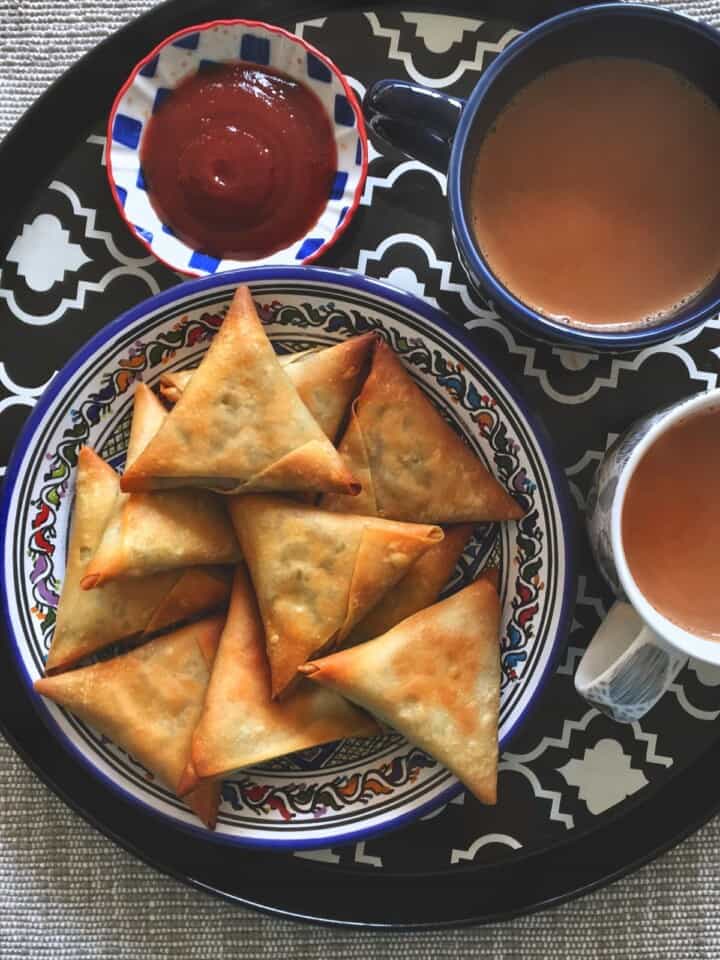
Baking samosas is so easy, tasty and can save you time, dishes and calories! In this post, I will be sharing only how to bake samosas, whether fresh or frozen. For individual samosa filling recipes, do check the linked posts in this article.
Jump to:
If you have been following me on Instagram, then you would know our love for samosas, not just during Ramadan. 😁 From the days in Yanbu till today in Abu Dhabi, I always have a stash of samosas in the freezer for our weekend chai time treats. I have always deep-fried samosas, so I never thought of "baking" them.
Ramadan 2020 opened the doors to trying baked samosas because I have an oven, and also because some of my IG followers asked if I had tried baking. So I tested a few batches, and now we always bake samosas!
It took a few batches of baked samosas for us to start appreciating it because of our love for deep-frying. But tiny changes can bring some motivation in the journey to good health. right?
Why should you bake samosas?
Easy - you don't have to stand a long time to deep fry in batches and take in all the grease. You can bake a large batch in one go!
Tasty - It definitely is tasty, or as tasty as your filling, because baking or frying is just a way to cook the wrap. So a good wrap and a good filling will, anyway, give you great-tasting samosas. I found that if we don't brush the samosas generously with oil, then the wraps get crumbly. So, make sure you brush both sides of the samosas generously with oil. But I will not say that baked tastes better than the fried version- No. The Fried version always wins.
Semi-healthy - I can't vouch for Healthy because with samosas, quantity matters. You can't eat just one. If the samosas are deep-fried, then you end up eating at least three or four. But if you bake, you will feel eating five is okay. Always used switz samosa leaves or made with all-purpose flour, so I can't help with the healthy wrap yet. Hopefully in future, InshaAllah.
Bonus reasons - You don't have to worry about your badly wrapped samosas that have large openings and fear frying in oil. You don't have to wonder what to do with all the oil after deep frying. Don't have to worry about washing the greasy kadai. Don't have to worry about sharing the samosas with picky eating neighbours, friends or guests. They all love the word "baked"! 🤣
Which Pastry Wrap Works Best?
Which pastry wrap can you use to bake samosas? The wrap you use makes a real difference to the final texture. Here is a quick guide:
Samosa patti/samosa leaves: This is the classic choice and what I use in this post. Store-bought samosa leaves (I always reach for Switz brand) crisp up beautifully in the oven when brushed well with oil. They give you that familiar thin, flaky shell.
Puff pastry: For a richer, flakier result, puff pastry is a wonderful option. It puffs up in the oven and gives you golden, layered edges. I use it in my Afghan Sambosa recipe, triangular puff pastry parcels filled with spiced minced meat and peas. The result is absolutely worth trying.
Filo/phyllo pastry: Filo is thinner than samosa patti, so layer two to three sheets together before wrapping to get enough structure. It bakes to a very light, shatteringly crisp shell. In my Keema Samosas recipe, I mention filo as a great substitute for samosa leaves. It works particularly well for baking since it crisps faster than it would when frying.
Spring roll wrappers: These are a decent backup if you cannot find samosa patti. They are slightly thicker than filo but thinner than samosa leaves, and they bake well with a generous brush of oil.
Instructions
Watch and learn how to wrap samosas.
Watch the latest video on how I wrap samosas on my Instagram.
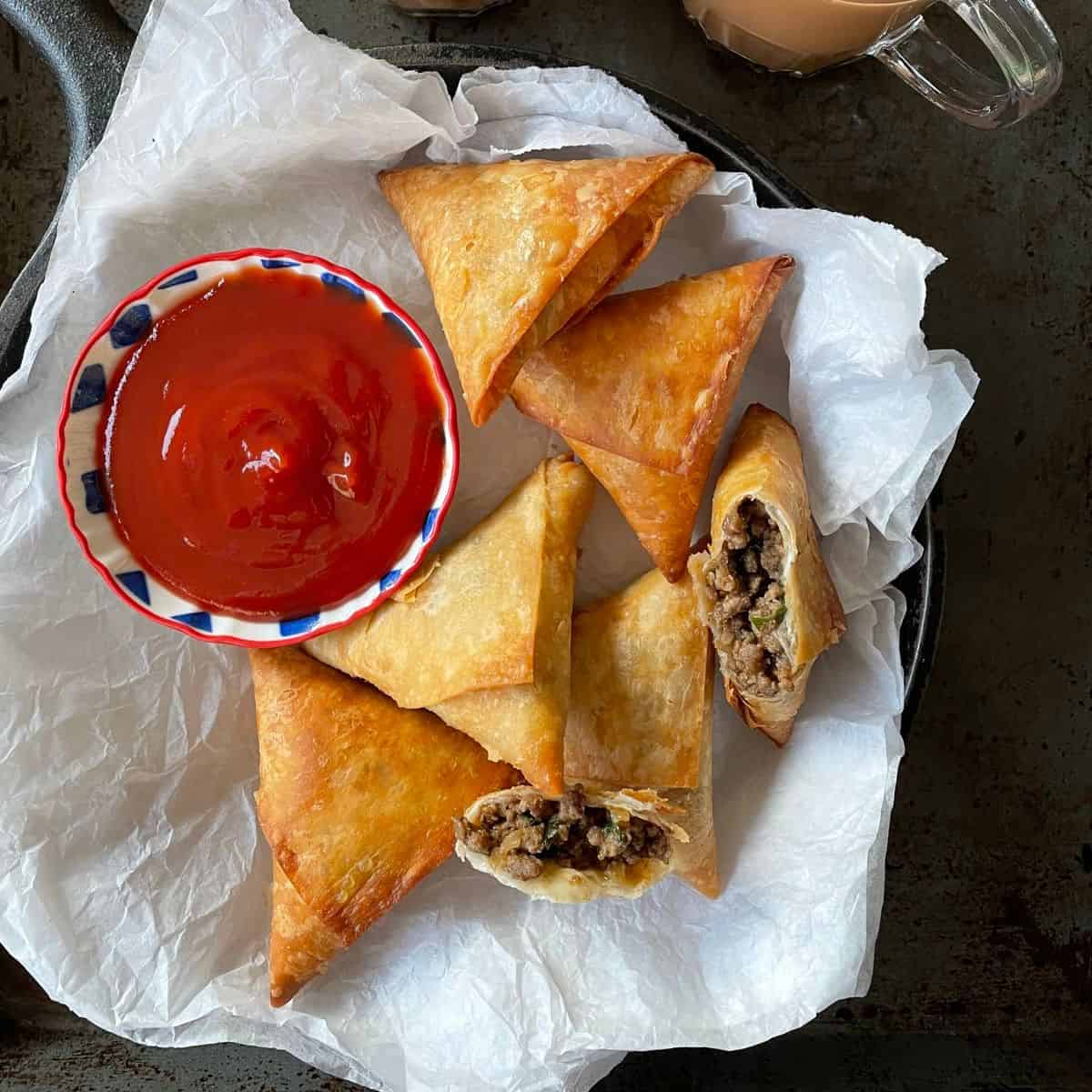
These steps apply to both frozen and freshly made samosas. The samosas shown here are of my homemade Saudi Meat and Mung. If using frozen samosas, do not thaw.
Let's start!
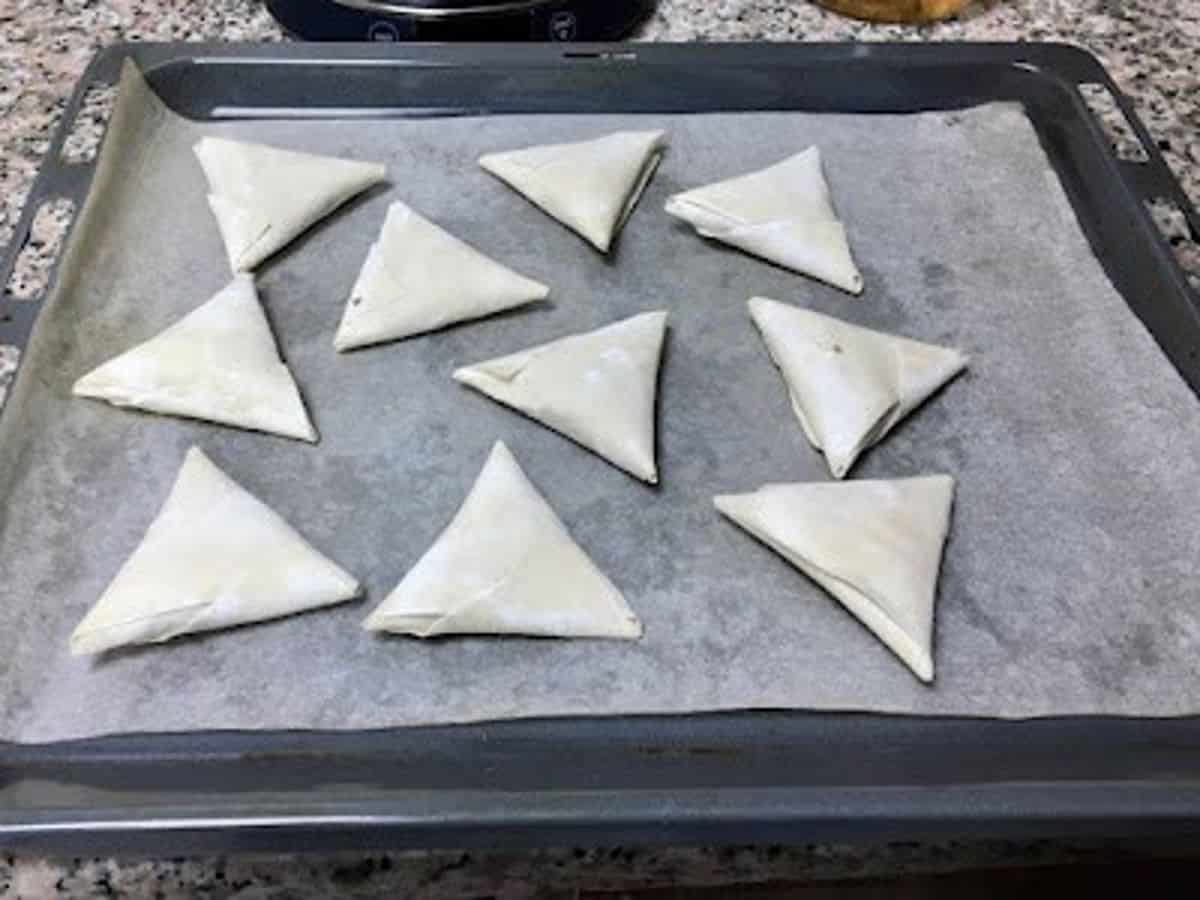
Preheat the oven to 200℃. Line a tray with foil or baking paper (I almost always use foil, but I had this sheet on it after baking cookies, so I continued with it)
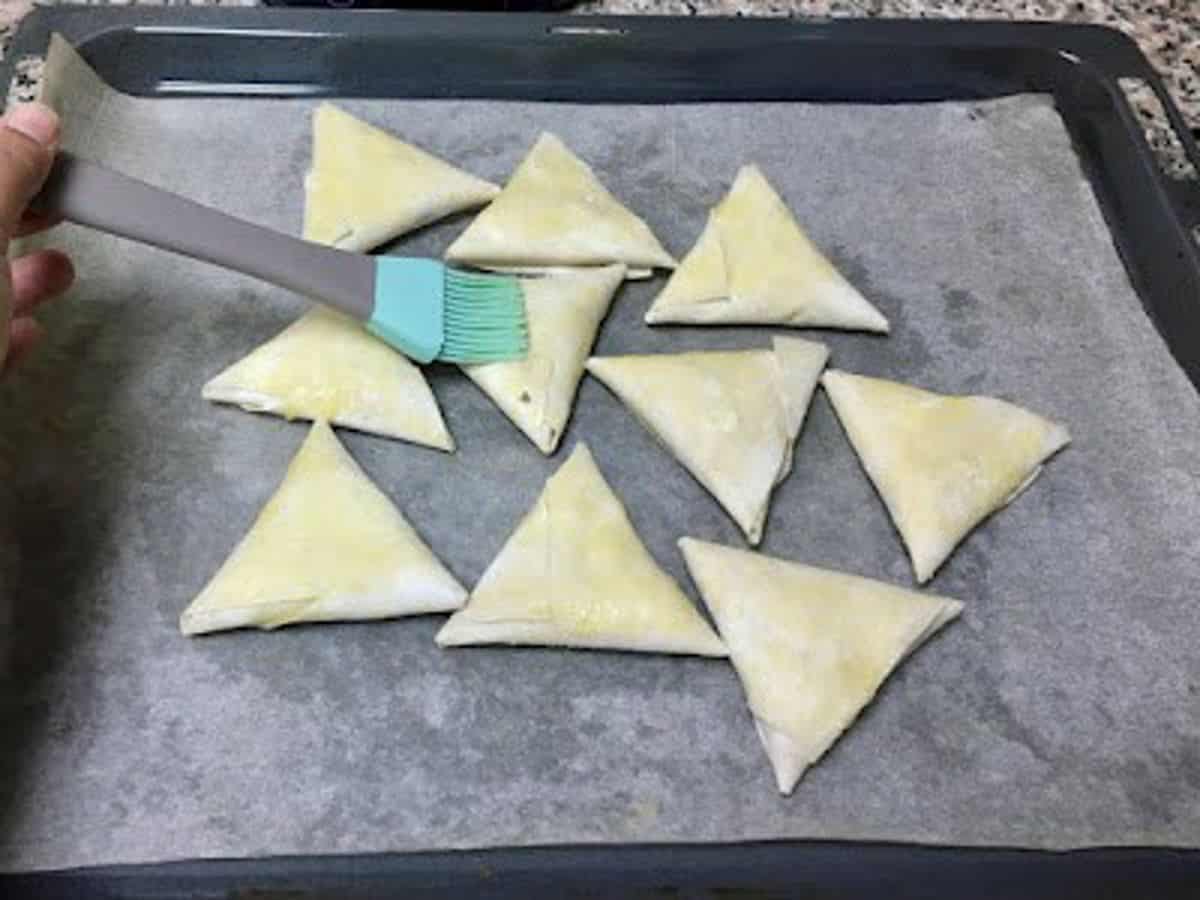
Use melted ghee or any other cooking oil (I have tried sunflower oil and olive oil) to brush each fresh or frozen samosa generously on both sides. I have used my homemade frozen samosas made using store-bought leaves.
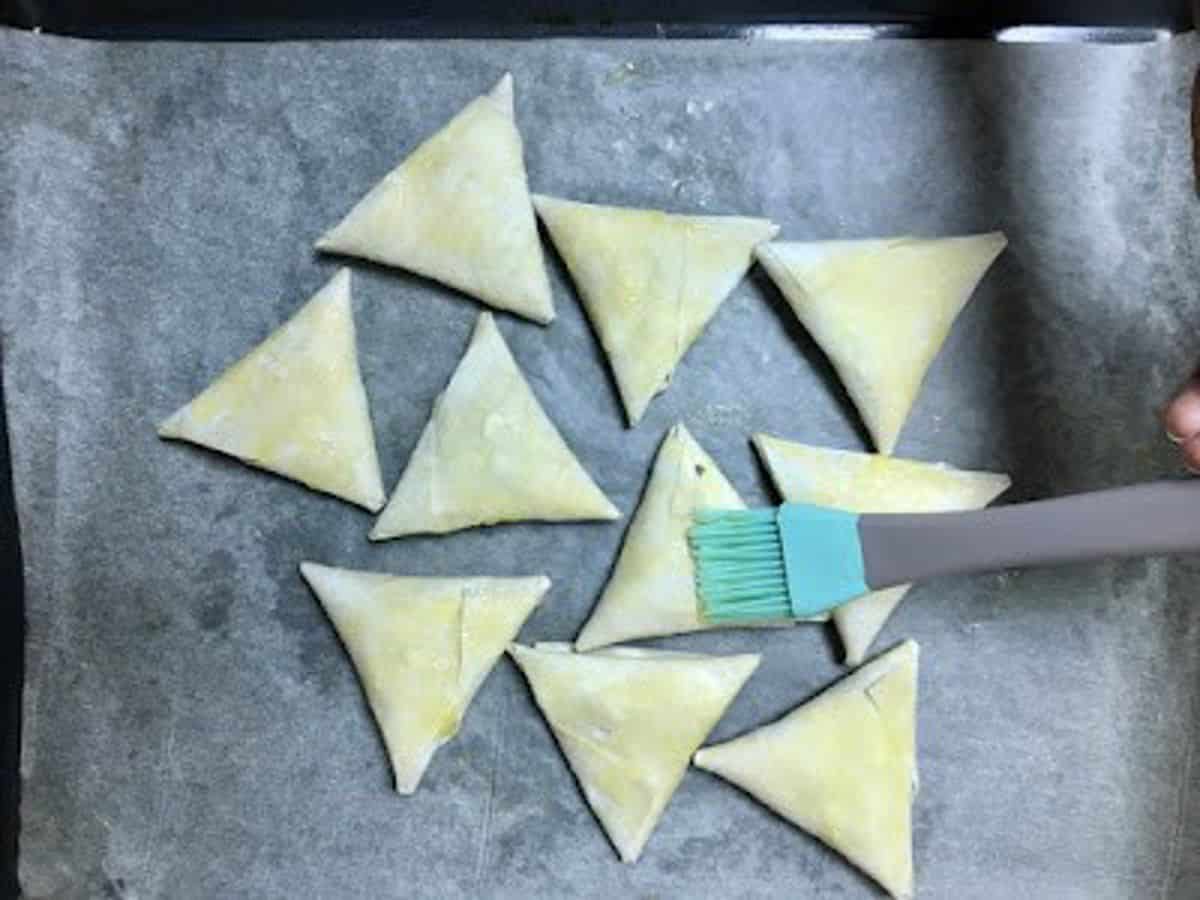
After brushing both sides, place the tray in the middle rack of the preheated oven and bake the samosas for 10 to 15 minutes or until they start to brown on the edges.
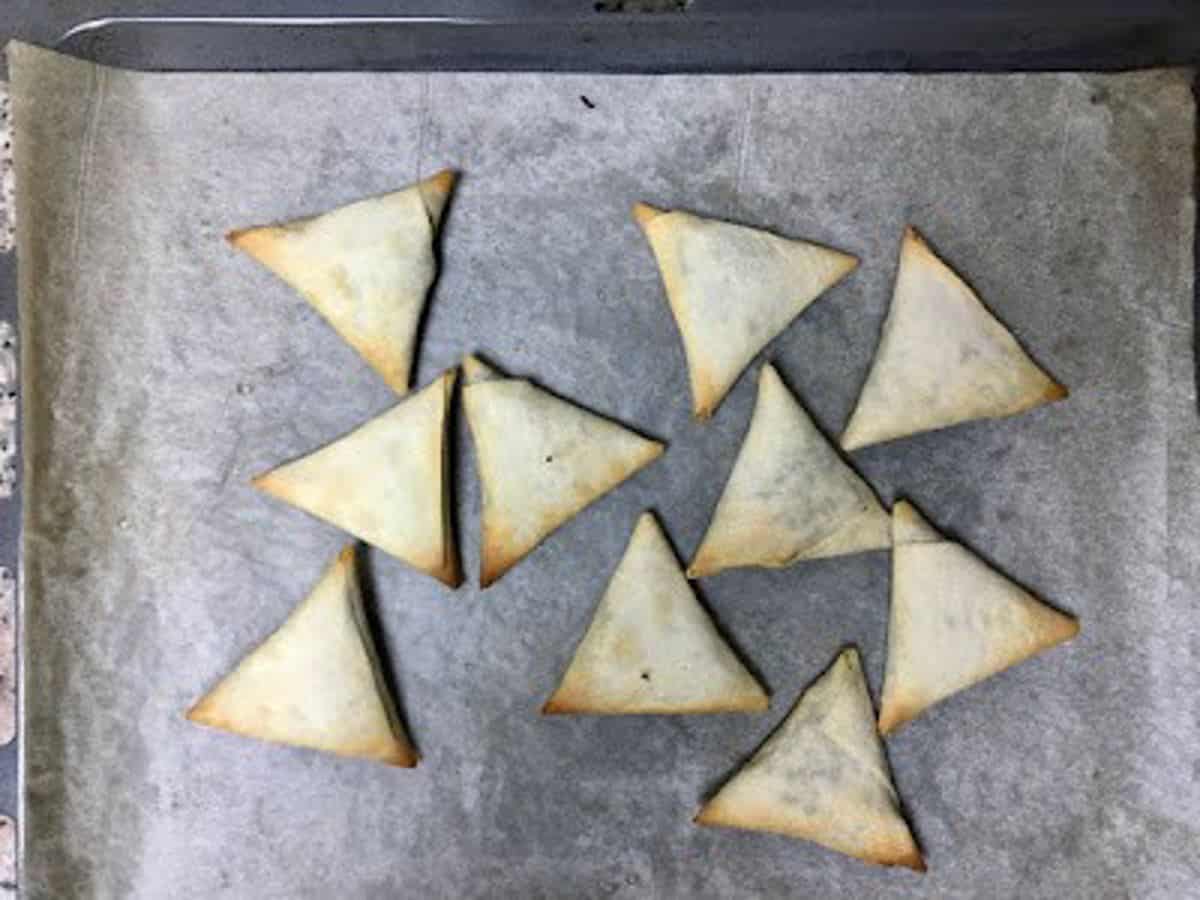
Remove the half-baked samosas from the oven and carefully turn each samosa and bake for another 10 to 15 minutes.
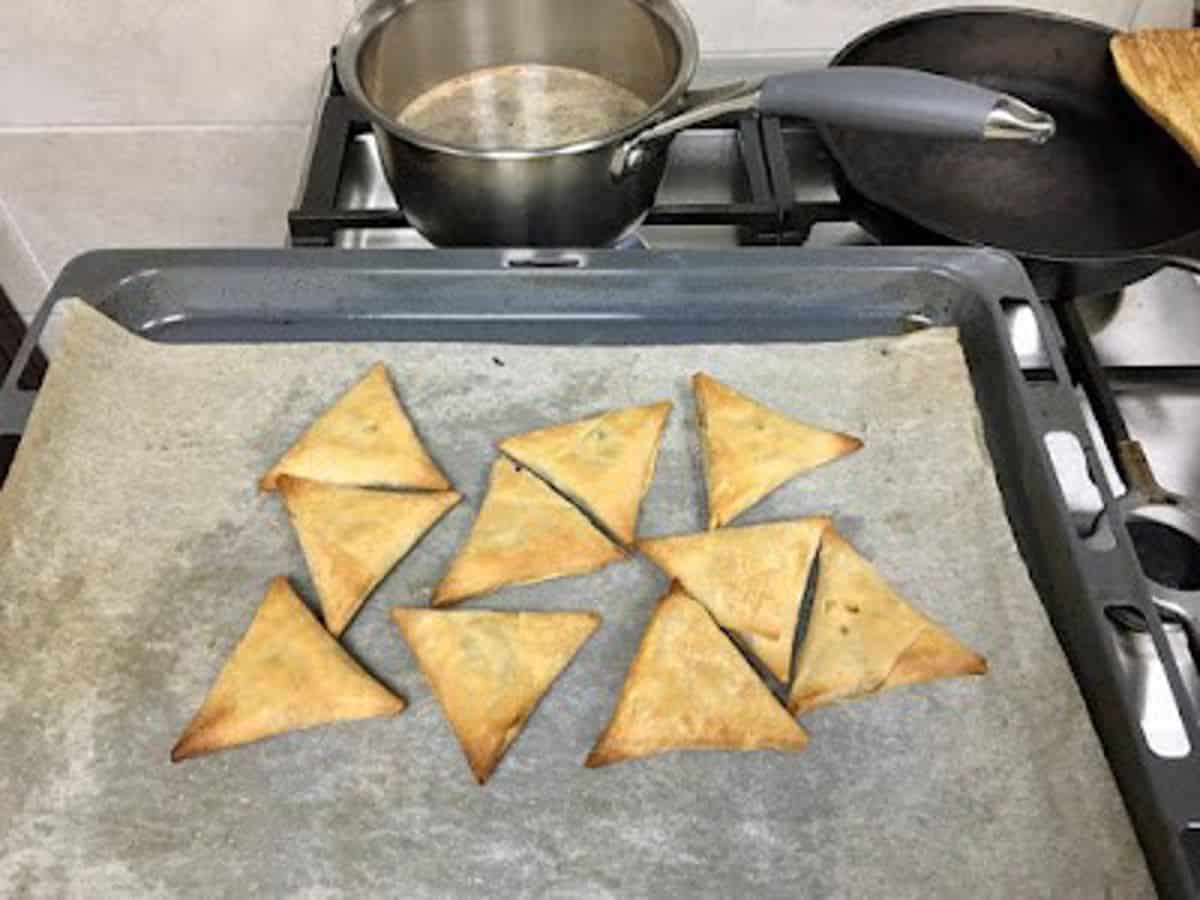
You may brush with some oil if you see the surface is too dry. Take the time to prepare your dip and some hot chai!
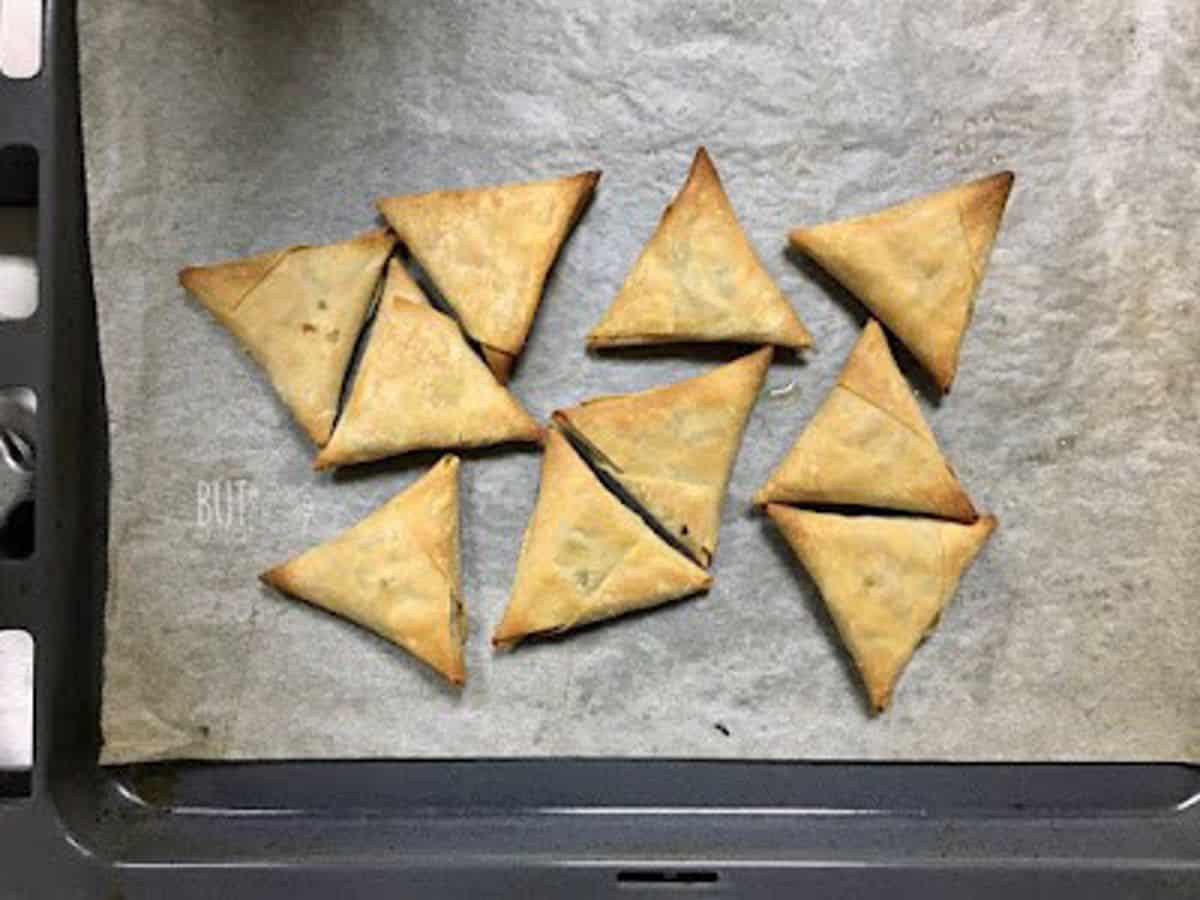
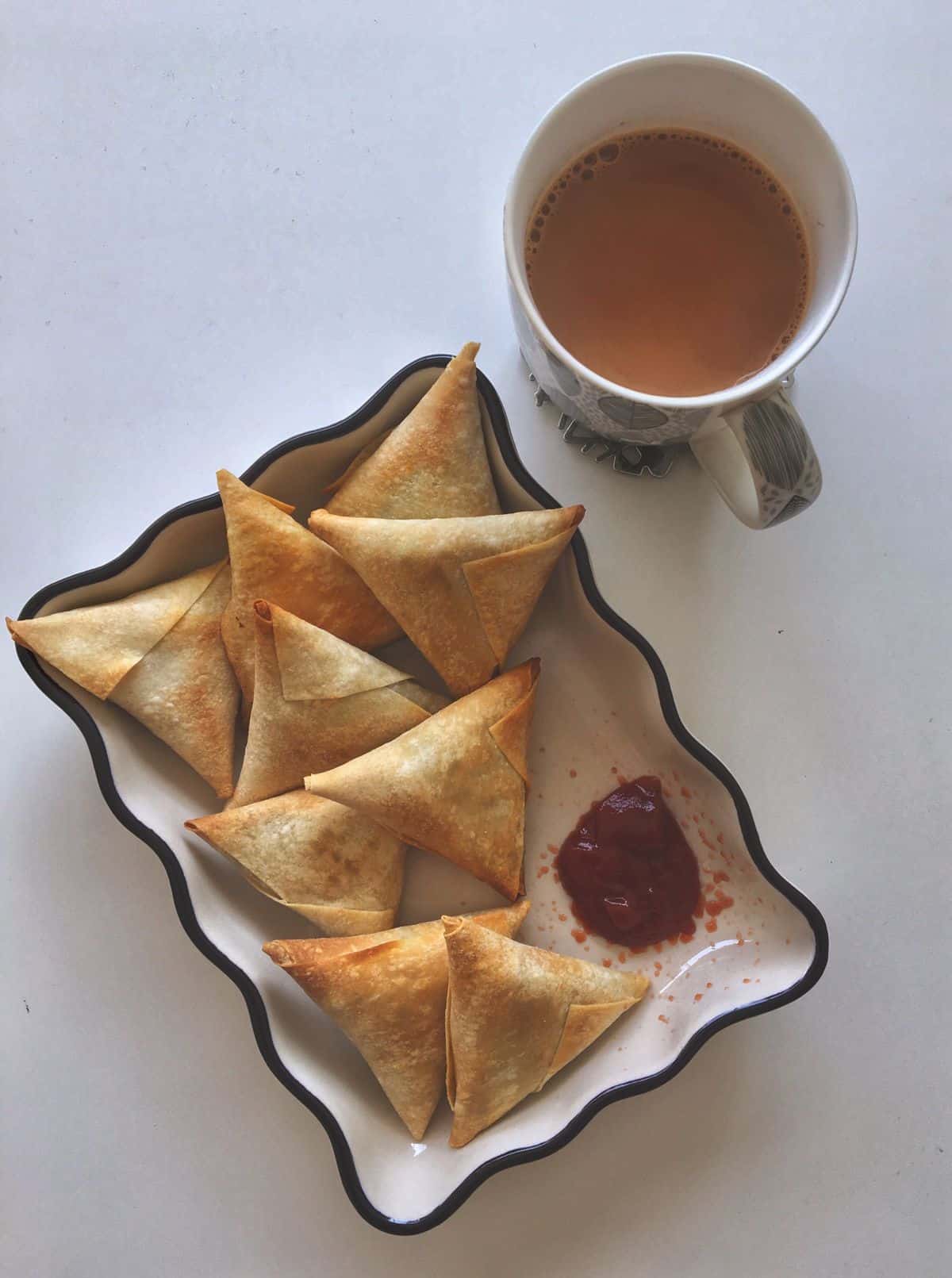
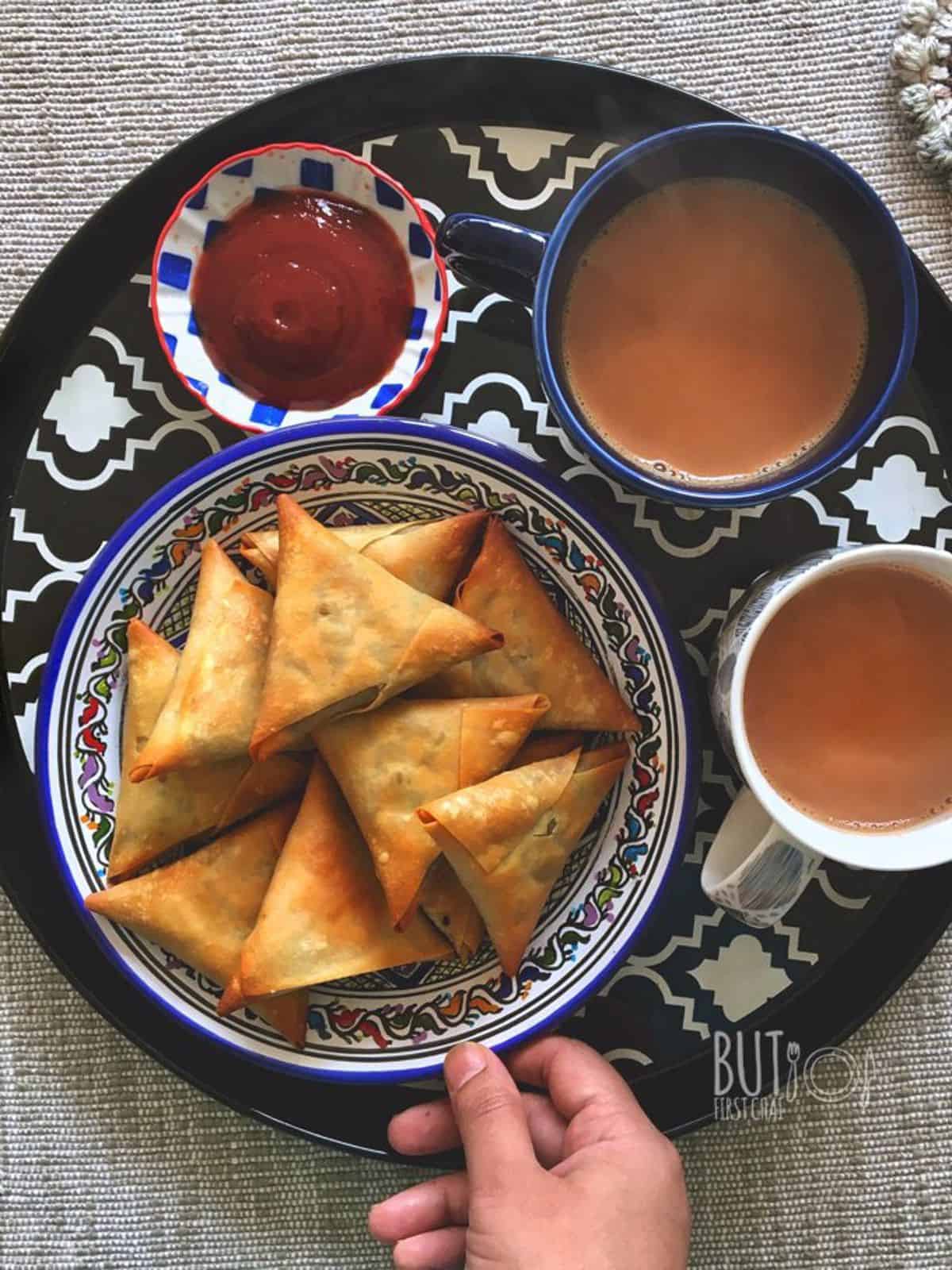
Remove baked samosas from the oven and let them cool for 2 to 3 minutes before you serve them with some ketchup and a hot cup of chai!
Dipping Suggestions
Baked samosas are best served hot with a dipping sauce on the side. Tomato ketchup is the family classic in our house, but mint chutney, tamarind chutney or a simple garlic yoghurt dip all work beautifully. Even a squeeze of fresh lemon over the top makes a great choice!
Baked Samosa Questions, Answered
Can I bake frozen samosas without thawing?
Yes! There is no need to thaw frozen samosas before baking. Thawing first can make the pastry soggy before it even hits the oven.
Which oil works best for baking samosas?
I have tested all three and here is my honest take: ghee gives the richest flavour and a beautiful golden colour, so it is my personal favourite. Sunflower oil gives the most even, consistent browning and is the most neutral in taste. Olive oil works fine, but adds a slightly different flavour that can feel out of place with Indian spice fillings. Whatever you use, be generous, as skimping on the oil is the number one reason baked samosas come out dry and crumbly rather than crisp.
How long do you bake samosas at 200°C?
For fresh samosas, bake for 10 to 15 minutes on the first side, flip, then bake for another 10 to 15 minutes until golden brown at the edges. For frozen samosas, add 5 to 10 minutes extra. Every oven is different, so keep an eye on the colour rather than the clock.
Why are my baked samosas not crispy?
The most common reasons are: not brushing enough oil (be generous on both sides!), not preheating the oven properly, or overcrowding the tray. Give each samosa space so hot air can circulate all around it. Baking in a single layer on the middle rack with a fully preheated oven makes the biggest difference.
How to reheat baked samosas?
The oven is your best option for reheating. Place leftover baked samosas on a tray and reheat at 180°C for 8 to 10 minutes until heated through and the pastry has crisped back up. The air fryer works even better; 3 to 5 minutes at 180°C, and they taste almost freshly baked.
Avoid the microwave. It rehydrates the pastry and turns it soft and chewy rather than crisp.
Enjoyed this Recipe?
Did you know that commenting and rating recipes is one of the best ways to support your favourite food bloggers? If you tried this recipe, please leave a review in the comments with your ⭐️⭐️⭐️⭐️⭐️ rating. Your feedback helps my small business keep offering free, high-quality recipe content. It is the best way to help me thrive in an increasingly competitive AI world.
📖 Recipe Card

How to bake samosas?
Equipment
- 1 baking sheet
Ingredients
- Samosas, freshly made or frozen*
- cooking oil
Instructions
- Preheat your oven to 200℃ hot air.
- Line a baking tray with foil or baking paper.
- Place your samosas on it and start brushing both sides of the samosa with your choice of cooking oil.
- Put the tray in the middle rack of the preheated oven and bake for 10 to 15 minutes or until you start seeing it brown the corners of the samosas.
- Remove the tray and flip the samosas and bake again for another 10 to 15 minutes or until you see it start browning. Take the time to prepare your dip and some hot chai!
- Remove and transfer to a serving plate and serve baked samosas with any dips or ketchup and some hot cup of chai!
Nutrition Info
Nutritional information is an estimate provided for informational purposes only. Values may vary based on ingredient brands, cooking methods, and portion sizes.

Annie Jenkins says
Thank you for the tips ☺☺ I found what I was searching for (^_^)
Johnny Fox says
Hi and thankyou for your post.
I also bake my samosas but use sort of a dosa wrap but instead of full dosa recipe I just use red lentils without the rice, you can see my video on youtube.
Hope you like it
Heather B says
I'm a little nervous cooking with a lot of oil. Liked the ease of cleaning up. They were perfectly crispy on outside and cooked inside. Great option. Thanks
Joanne Heidkamp says
I just came on here to learn to bake my samosas. I actually made the wraps and filling using another blog. But that recipe calls for frying, and I've decided I'd like to test out baking. As you say, it saves the standing in front of the stove frying, and also saves having a pan of oil to deal with it. I am fascinated that a grandmother in Vermont, USA can connect with an Indian woman in the UAE over a shared love of samosas.
Alicia says
This was a lovely way to decrease oil usage. I love samoosas but hate the cleaning... This was so much easier 🙂