

Make soft, fluffy idlis with basmati rice and split urad dal using a regular mixer grinder.
If you cannot find idli rice or parboiled rice, you can still make a good batch of idlis with the basmati rice already sitting in your pantry. I developed this idli batter with basmati rice when I couldn't easily source traditional idli rice, whole urad dal, or a wet grinder. After plenty of trial and error, this is the idli batter ratio that works best for me most of the time.
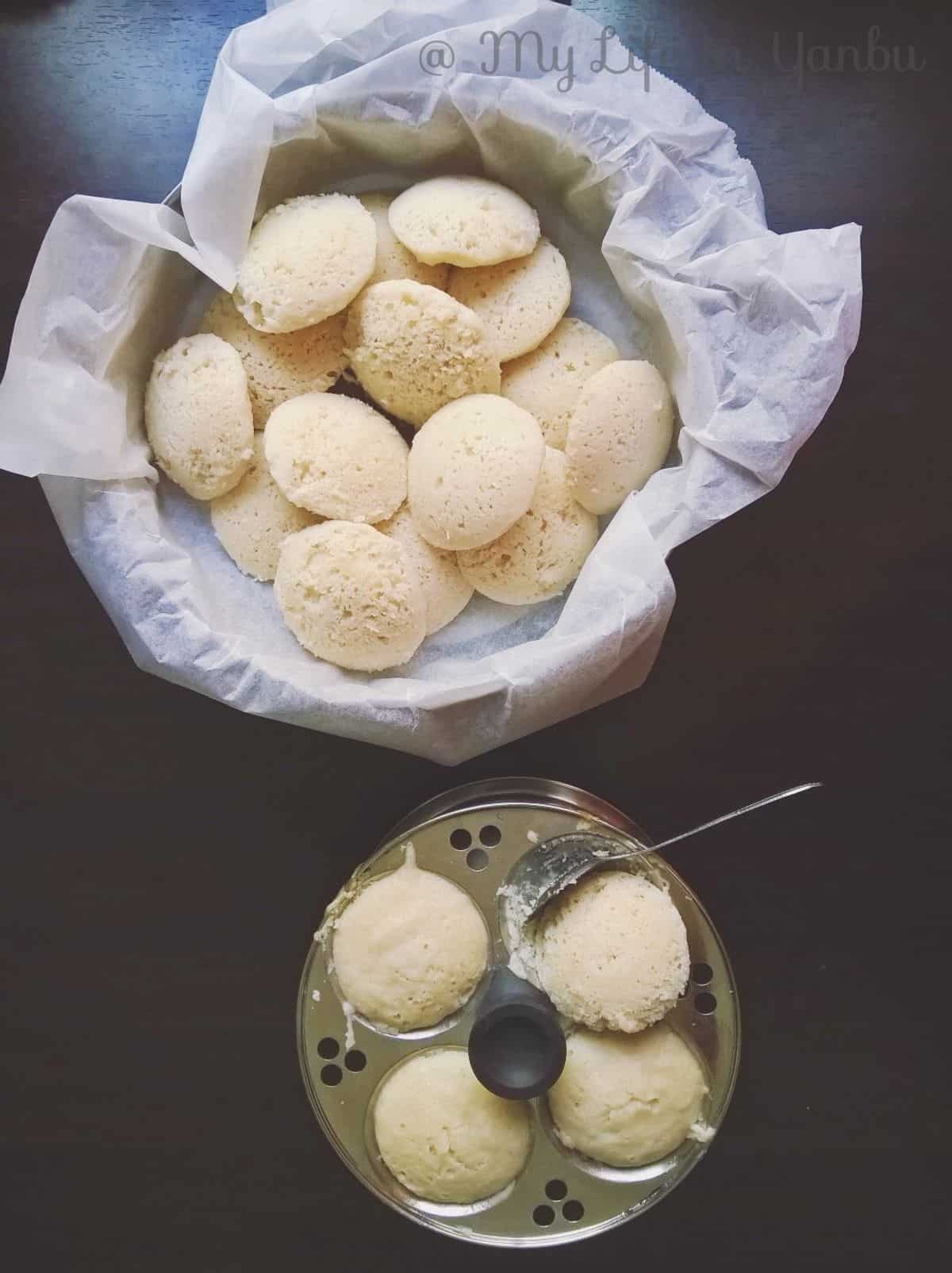
This is my small-kitchen method for making idli batter with basmati rice, split urad dal, poha and a little fenugreek using a regular mixer grinder. The batter needs to ferment overnight, and once fermented, it makes soft steamed idlis on day one and excellent dosas when diluted for later meals.
The important part isn't just the famous 4:1 rice-to-urad ratio. With this recipe, the grinding method, idli batter consistency, fermentation temperature and steaming time all matter.
Jump to:
- My biggest lesson with basmati rice idli batter
- Can you make idli with basmati rice?
- My idli-making story
- What should idli batter consistency be?
- How to ferment idli batter
- How to make idlis
- What to do with leftover idlis?
- Guidelines to Experiment with Your Idli Batter Ratio
- What is the difference between idli batter and dosa batter?
- What if I only have a mixer grinder?
- What to serve with basmati rice idli
- More South Indian breakfast recipes
- 📖 Recipe Card
- 💬 Comments
Idlis are steamed rice cakes made with fermented batter. Their origin is in dispute between Tamil Nadu and Karnataka! Do I care? 😛 - that's for those who have no idea what this dish is, which I believe is most unlikely given that Saravana Bhavan is all over the world! I wonder who named these idlis or how that word got coined? Nevertheless, we all have invariably had idli and sambar at least once in our lives. If it is new to you, then you are missing the most humble delicacy of South Indian cuisine.
My biggest lesson with basmati rice idli batter
I learnt this the hard way. The first time I made idli batter with basmati rice, it fermented beautifully... and still produced hard idlis that smelled strongly of fenugreek.
So I kept testing.
I eventually realised that the ratio was only one part of the equation. The way the urad dal is ground, how much water goes into the batter, how warm the batter stays while fermenting and how long the idlis steam can all change the final result.
And that is why this recipe is here.
Can you make idli with basmati rice?
Yes, you can.
Traditional idli recipes use varieties of rice suited to idli making, including parboiled rice, but you do not have to abandon the idea of homemade idlis just because you only have basmati rice.
This recipe uses:
- Basmati rice
- Split urad dal
- Thick poha
- A small amount of fenugreek seeds
The poha helps with the texture, while the urad dal needs to be ground properly so the fermented batter has enough aeration.
If basmati rice is what you have, this is a practical way to turn it into idli batter.
For the exact quantities and timings, use the recipe card below.
My idli-making story
My mom used to make her idli batter in a Sowbaghya wet grinder late in the evening. I would stand beside the grinder watching the creamy batter swirl around the stones while she warned me not to put my fingers anywhere near it. I was her very proud sous chef.
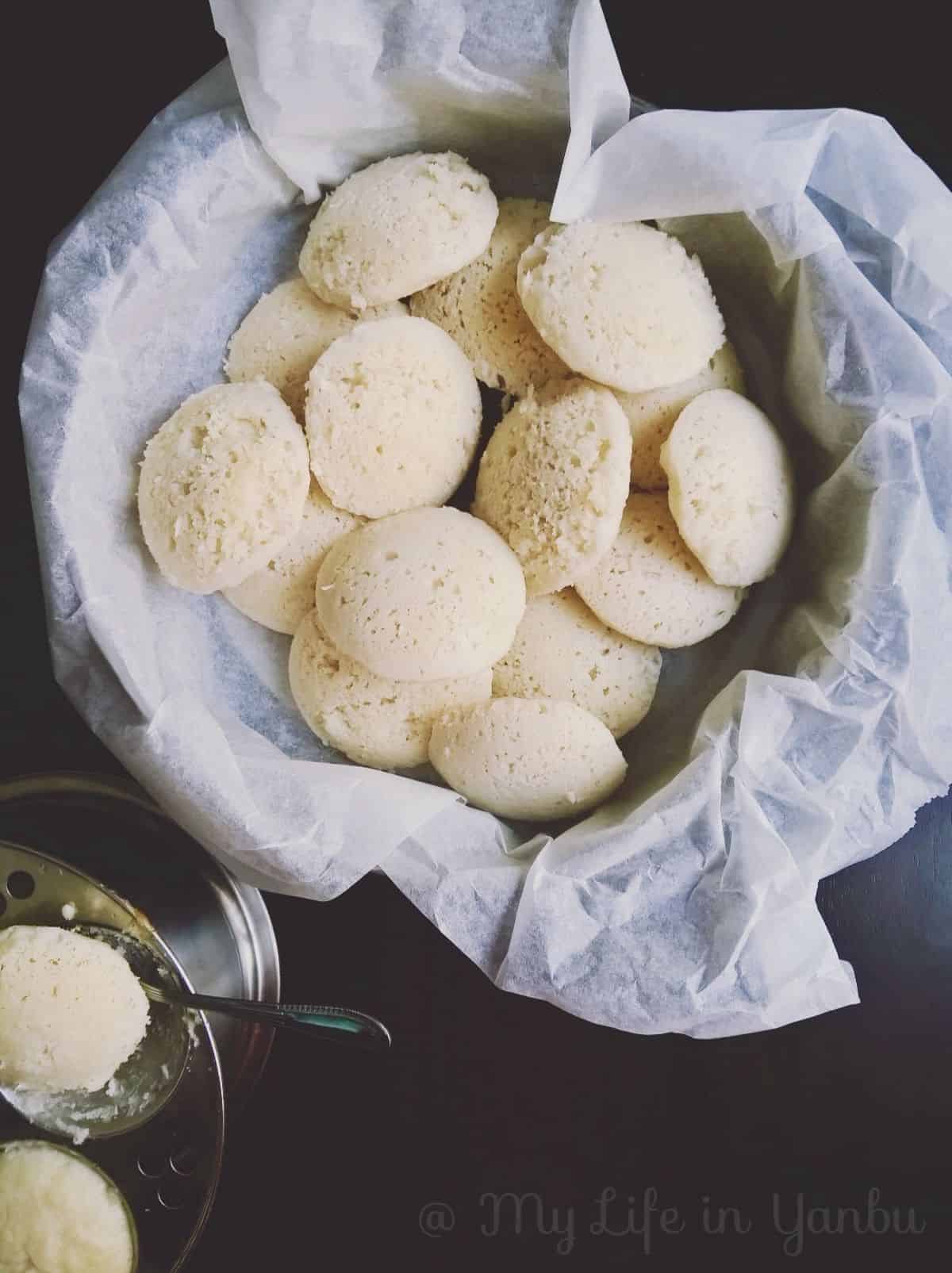
That night I went to bed dreaming of having hot idlis laden with spicy sambar and chutney. The reward came the next morning... hot, soft idlis like flowers with spicy sambar and chutney, and somehow my plate always seemed to refill itself.
After I moved to Bangalore, I must admit I never missed mom's idlis because there are so many outlets that give you super soft and fresh idlis. The sad part was, at home I would lose count, whereas at the counter, I am just given 2 or 3 on a plate 🙁 That hardly feeds my hunger! I used to be too embarrassed to order more 😛
A few years down the line, I had a fully equipped kitchen at my disposal in Bangalore, yet I didn't have to make idli batter, BECAUSE it was the advent of home delivery of ANYTHING! The idli batter was just a call away. The best thing that a working woman can ask for - ready-made fresh idli/dosa batter to make our lives easier.
Back in Coimbatore, my mom had packed off the wet grinder and resorted to the ready-made batter. Her excuse was that she didn't have to make a big batch anymore, as all her kids are away. Well, true, but still… sigh! It never occurred to me to ask her for the recipe. It was like the ready-made batter has replaced the wet grinder!
Married and off, I came to Yanbu with a written knowledge of the 4:1 ratio of rice to urad dal formula that has never failed for my mil. Unlike my mom, she uses a Preeti mixer grinder. I didn't even think of buying the modern-day tabletop wet grinder! Must have made my life a lot easier, but we are not going to give up, right?
What is the idli batter ratio for this recipe?
The basic idli batter proportion here is:
4 parts basmati rice : 1 part split urad dal
For the recipe below, that means:
2 cups basmati rice + ½ cup split urad dal
I also add ¼ cup thick poha and ¼ teaspoon fenugreek seeds.
The 4:1 ratio is a useful starting point, but I would not treat it as a magic formula. Your rice, dal, grinder, room temperature and fermentation conditions can all affect the batter.
If you already have a trusted family idli batter ratio, I would stick with it before changing several things at once.
What should idli batter consistency be?
Idli batter consistency is one of the most important parts of this recipe.
You want a batter that is:
- Thick and spoonable
- Smooth and aerated from the urad dal
- Loose enough to fall from a ladle
- Not watery
- Not so thick that it holds its shape
A common mistake is adding too much water because the batter looks thick before fermentation. Don't rush to correct it.
The batter will loosen slightly as it ferments. If your fermented batter is extremely thick, add a little water and mix gently before steaming.
If it is already loose and watery, the problem is harder to correct, so it is better to add water cautiously during grinding.
How to ferment idli batter
Cover the bowl loosely and leave it in a warm, draft-free place for around 8 to 10 hours. Do not use the clock alone to decide whether the batter is ready. Look at the batter. A properly fermented batter should have visibly risen and become lighter and aerated.
Fermentation depends on your weather
This is one reason I don't want to give you a single guaranteed fermentation time. When I was in Saudi Arabia, my batter behaved very differently in winter and summer. During winter, it could take more than 14 hours, while summer fermentation could take less than 10 hours.
So if your kitchen is cold, give the batter more time. If it has only just started fermenting after eight hours, let it continue.
How to make idlis
Once the batter has fermented, do not aggressively stir it. You want to keep as much of that fermentation-created air as possible.
- Bring water to a boil in your idli steamer.
- Lightly grease the idli moulds.
- Gently fill each mould with the fermented batter.
- Place the moulds in the steamer.
- Steam over medium heat for about 10 minutes.
- Remove the moulds and let them rest for a couple of minutes.
- Loosen the idlis gently with a thin spoon or butter knife.
I find that steaming for longer than necessary can make the idlis firm rather than soft, so I would not keep them in the steamer simply because they feel slightly moist immediately after cooking.
Serve hot.
What to do with leftover idlis?
I make around 24 idlis of medium-sized mould. Usually, there are no leftovers, but when I do have a few left, then it gets stored and repurposed into Idli Upma!
Guidelines to Experiment with Your Idli Batter Ratio
Don't alter the ratio or your trusted family recipe until you have tested other factors, which include:
- Using ice-cold water for Mixie - use ice-cold water throughout the grinding process to keep the machine heat in control. A heated-up jar will alter the batter texture.
- Consistency of urad dal batter - Urad dal needs to become fluffy and smooth, and also frothy is good news.
- The way you have mixed the batter - use your hands and mix so that both rice and urad batter combine well into one texture. Once fermented, do not over-mix the batter if you are planning to make idlis.
- Overall batter consistency - this is the most important factor that will most likely fix your issues. It is hard to explain, but I will say the batter should not be so thick that it fails to drop off the ladle.
- Temperature - try keeping the batter in a non-air-conditioned room or draft-free area, which means a location where there is not too much air circulation.
- Time taken to ferment - this differs according to the weather. More time during winter and less during summer. So have patience!
- Time taken to steam - steaming for longer than 10 minutes will yield hard idlis.
What is the difference between idli batter and dosa batter?
The difference between idli batter and dosa batter is mainly in how the batter is prepared and used rather than requiring two completely unrelated recipes.
For idlis, you want a thicker fermented batter that can hold its shape in the mould while steaming. For dosa, the same fermented batter can be diluted with water so that it spreads easily across a hot tawa.
That is one of the reasons I like this recipe so much. You don't have to worry about wasting a failed or leftover batch. If the idlis don't work out the way you wanted, make dosas. If you want dosa from the freshly fermented batter, dilute a portion with water and use it.
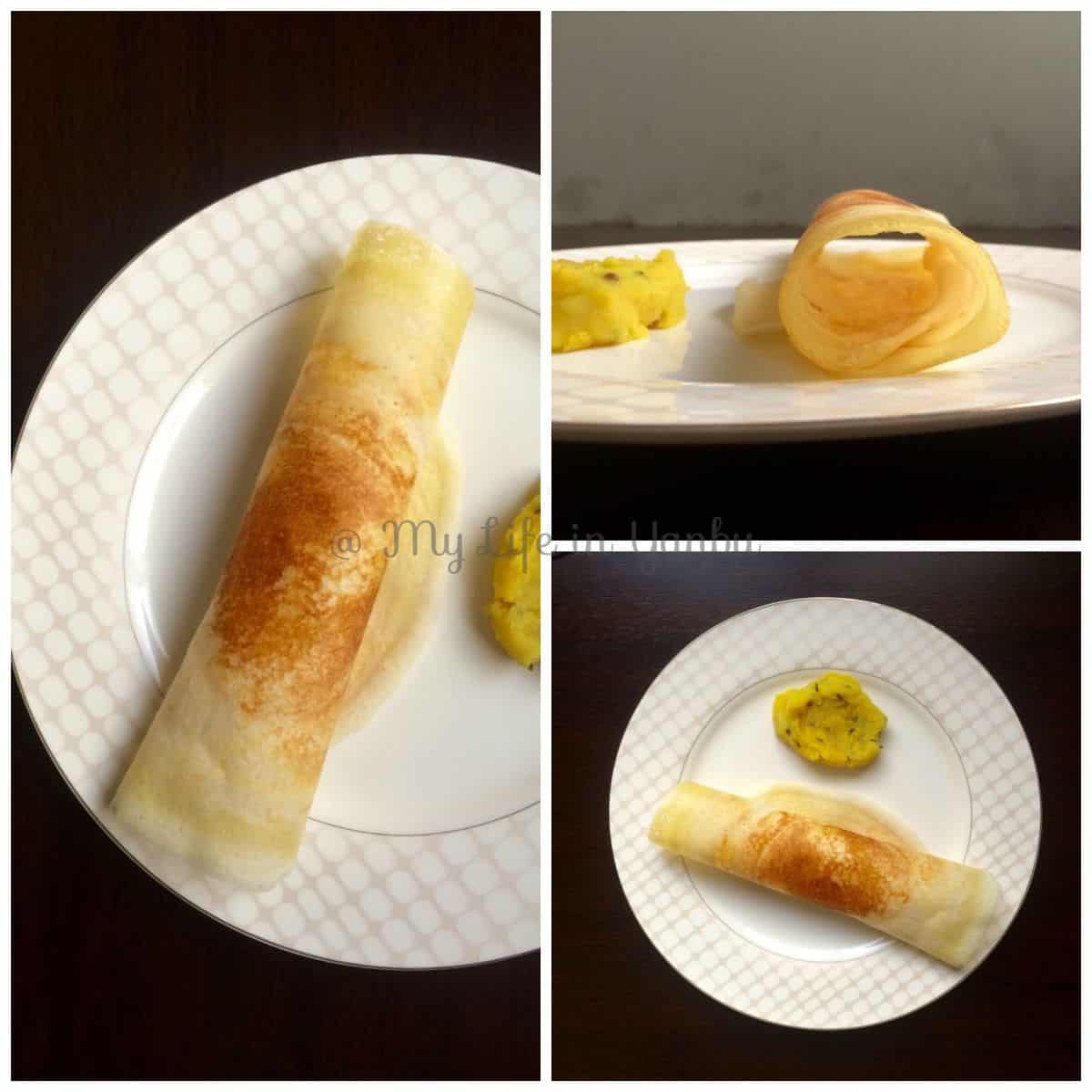
I usually follow this rough progression:
Day 1: idlis
Day 2: dosas
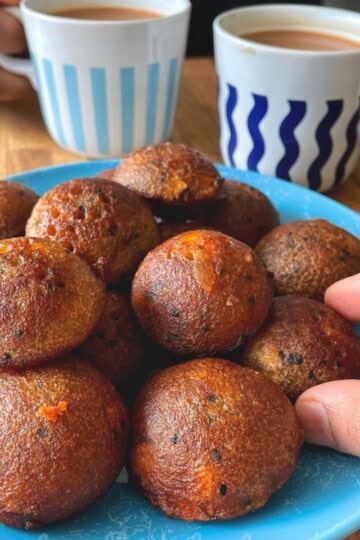
Day 3: dosas, uthappams or paniyarams
You can also make dosa on day one by thinning some of the freshly fermented batter.
For crispier and more golden dosas, I sometimes add a little sugar to the portion being used for dosa.
What if I only have a mixer grinder?
That's exactly why this recipe exists. A regular mixer grinder works, but you need to be mindful of heat.
My biggest tips for using an idli batter grinder or mixie are:
- Use the largest jar available.
- Grind the urad dal first.
- Use very cold water.
- Add water little by little.
- Grind the rice in batches rather than overloading the jar.
- Transfer the batter out as soon as each ingredient is properly ground.
Shorter grinding sessions help keep the batter and machine from getting excessively warm.
What to serve with basmati rice idli
Fresh idlis pair well with something saucy on the side. Serve them with:
- Sambar
- Coconut chutney
- Idli podi
- Tomato onion chutney
- Tomato coconut chutney
- Veg kurma
- Chicken chettinad curry
For a simple breakfast, I like hot idlis with chutney and sambar. If you are making a larger batch, keep the cooked idlis warm and serve them as they come out of the steamer.
More South Indian breakfast recipes


I no longer make this batter regularly these days because ready-made batter has made life much easier. But this recipe still matters to me because it was the solution I needed when I had basmati rice, a mixer grinder and a serious craving for proper homemade idlis.
If you grew up with one particular family recipe for idli batter, what is the rice-to-urad proportion your family swears by?
📖 Recipe Card

Idli Batter using India Gate Classic Basmati Rice & Split Urad Dal in Butterfly Mixer Grinder
Ingredients
For preparing the batter
- 2 cups basmati rice, soaked in 2½ cups of water
- ½ cup split urad dal , soaked in 1½ cups of water
- ¼ cup thick poha, aka poha (beaten or flattened)
- ¼ teaspoon fenugreek seeds
- water as required
For making Idlis
- cooking oil, sesame oil, coconut oil etc. (to grease the moulds)
- water as required, as per your steamer
Instructions
Soak
- Rinse rice gently two to three times in water and soak it in 2 to 2.5 cups of water along with the rice flakes (poha) for at least 5 to 6 hours.
- In a different bowl, rinse the urad dal and soak it in 1.5 cups of water along with the fenugreek seeds.
- Keep both bowls covered.
Grind
- Strain the soaked urad dal and reserve the water in the fridge or freezer for a few minutes to make it cold more quickly.
- Add the strained urad dal to the biggest jar and grind it to a smooth, frothy and fluffy batter with up to ¼ to ½ cup of reserved water that is cold, or just use very cold water.
- Ensure you add cold water little by little just to aid the grinding.
- The mixer grinder tends to get hot, so use only very cold water or ice cubes to aid the grinding.
- Transfer the batter into a large bowl deep enough to store the batter for fermentation, as the batter will double in quantity.
- In the same jar, add two to three fistfuls of rice from the rice bowl. (Don't have to strain the soaked rice)
- I grind the rice in three batches in the largest jar. I have noticed that using a bigger jar but a smaller quantity makes the grinding faster and smoother.
- Add the reserved cold urad-soaked water or plain cold water little by little and grind the rice till smooth or to a fine, grainy consistency. You will not need more than a cup of water to grind all of the soaked rice in two to three batches.
- Transfer the rice batter into the bowl containing the urad dal batter.
- Add 1 to 2 teaspoons of salt or to taste.
- Mix the batters very well using your right hand.
- Cover the bowl lightly or use cling wrap, make a few holes, and allow the batter to ferment overnight for 8 to 10 hours.*(see notes)
Prepare Idlis
- After 8 hours, check if the batter is fermented - you will know this when you see the batter has risen. Keep it for another couple of hours if it has just started to ferment. Don't over-mix the fermented batter.
- Add enough water to the steamer and let it boil.
- Grease the idli moulds with oil.
- Pour the batter into the moulds and steam on a medium flame for 10 minutes.
- Remove the moulds from the steamer and keep it out for a couple of minutes before trying to unmould the idlis.
- Use a thin spoon or butter knife to remove the idlis from the mould and keep them in a hot pack.
- Serve hot with my two coconut chutneys, sambar or with Idli podi.
Notes
Nutrition Info
Nutritional information is an estimate provided for informational purposes only. Values may vary based on ingredient brands, cooking methods, and portion sizes.
Before I wrap up, let me add to the confusion LOL - my sister says it's 2 cups raw rice and 2 cups parboiled rice to 1 cup urad dal! Has anyone tried that? 🙂

Famidha Ashraf says
Though I no longer make the batter these days (thanks, iD 😄), making idlis with basmati rice was honestly a game-changer for me, especially when that's all I had in the pantry! The fermentation works beautifully, and the idlis turn out just as soft. Give it a try and let me know how it went in the comments below!
RPN says
Hello, this recipe is perfect. Thanks tons.