

This coconut-free moru curry recipe is a light, refreshing, and comforting dish that comes together in under 20 minutes. Made with sour curd or bottled laban and tempered in coconut oil with curry leaves, ginger, and green chillies, it is the kind of effortless Kerala staple. Best paired with a spicy pickle, a crispy beef fry, or a simple vegetable thoran on the side.
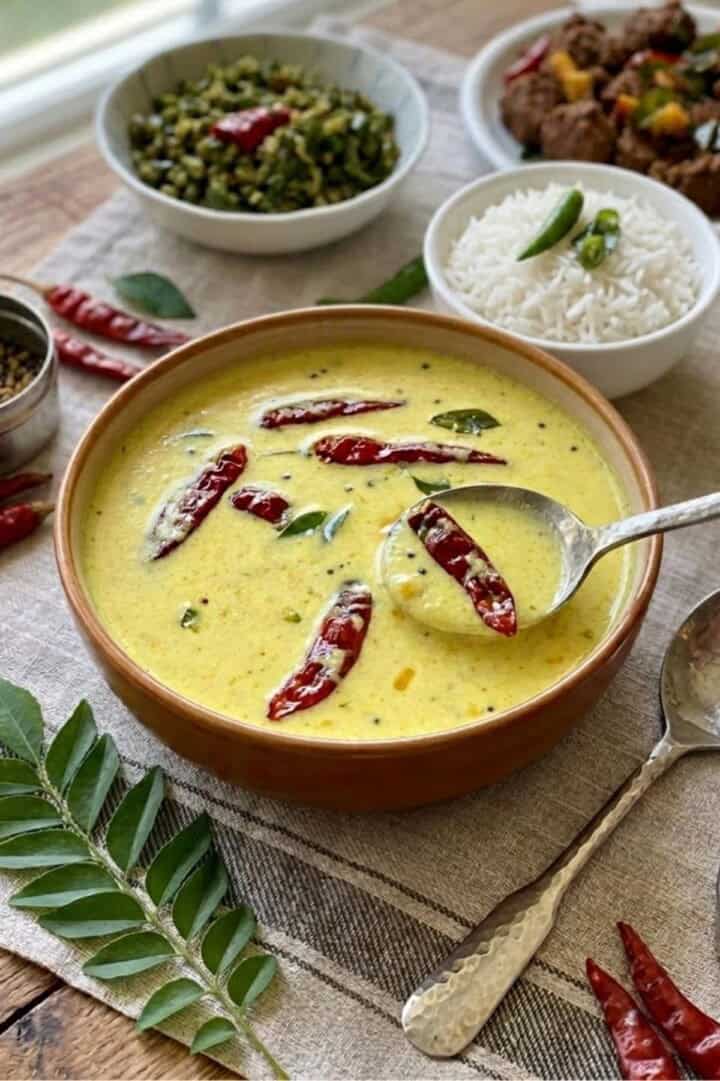
Quick Look: Moru Curry Recipe
- ⏱️ Prep Time: 5 minutes
- 🍳 Cook Time: 15 minutes
- 👥 Servings: 2
- 🔥 Cook Method: Stovetop
- ⭐ Difficulty: Easy
- 🎯 Key to Success: Prep before you cook and use room-temperature buttermilk.
Summarize and save this Recipe on
Jump to:
Rice and moru curry, or what we call moru kachiyathu, was my kinda reset meal...the one I make when I am tired, the fridge is half-empty, and I still want something that feels like home.
Living in the UAE, I reach for bottled laban almost every time (it is perfectly cultured for this). But on weekends, when I have leftover curd that has gone a little sour, this moru curry becomes exceptional. The tanginess you get from slightly sour yoghurt is irreplaceable.
Why You Should Try this Recipe
- Ready in just 20 minutes
- No fancy equipment required
- Works with buttermilk laban or sour curd
- Made with fresh, easy-to-find ingredients
- The ultimate pairing for steamed rice!
Key Ingredients & Notes
Here is a closer look at the ingredients that matter most. Find the full quantities in the recipe card below.
- Buttermilk / Sour Curd: This is the soul of the curry. Use room-temperature laban (shake the bottle well before using) OR whisk 1 cup of thick sour curd with 1 cup of water until completely smooth. The curd must be at room temperature before it goes into the pot.
- Coconut Oil: Do not skip the coconut oil for tempering. It is what gives moru kachiyathu that distinctly South Indian, Kerala-style aroma. Neutral oil will cook the onions, but it will not give you that signature fragrance.
- Curry Leaves: One sprig is all you need, but they are non-negotiable.
- Fenugreek Seeds: Adds a subtle bitterness that beautifully balances the sour curd. Do not be tempted to increase it.
- Green Chillies + Ginger: These two together are what give the curry warmth. Adjust the number of green chillies to your heat preference.
Head to the recipe card below for exact quantities, prep notes, and storage tips.
How to Make Moru Curry
Step 1: Get the buttermilk to room temperature
This is the most important step and the one most people skip. Take your bottled laban or the sour yoghurt tub out of the fridge and leave it on the counter before you start the prep. If you are using yoghurt, whisk 1 cup with 1 cup of water in a bowl until smooth and lump-free.
Step 2: Prep everything before you heat the pan
Mince the ginger, finely chop the green chillies, and dice the onion (or mini shallots). Have your spices measured out. This curry moves fast once the oil is hot. There is no time to chop mid-cook.
Step 3: Temper in coconut oil
Heat coconut oil in a small deep saucepot on medium heat. Add the mustard seeds, let them splutter, then add the fenugreek seeds, dried red chillies, and a few curry leaves. Let them sizzle.
Step 4: Sauté the aromatics
Add the diced onions and sauté on medium heat until they are soft and translucent. Next, add the chopped ginger and green chillies and sauté for about a minute. Then reduce the heat to low and add the turmeric powder and salt. Stir for just a few seconds.
Step 5: Turn off the heat, pour in the buttermilk
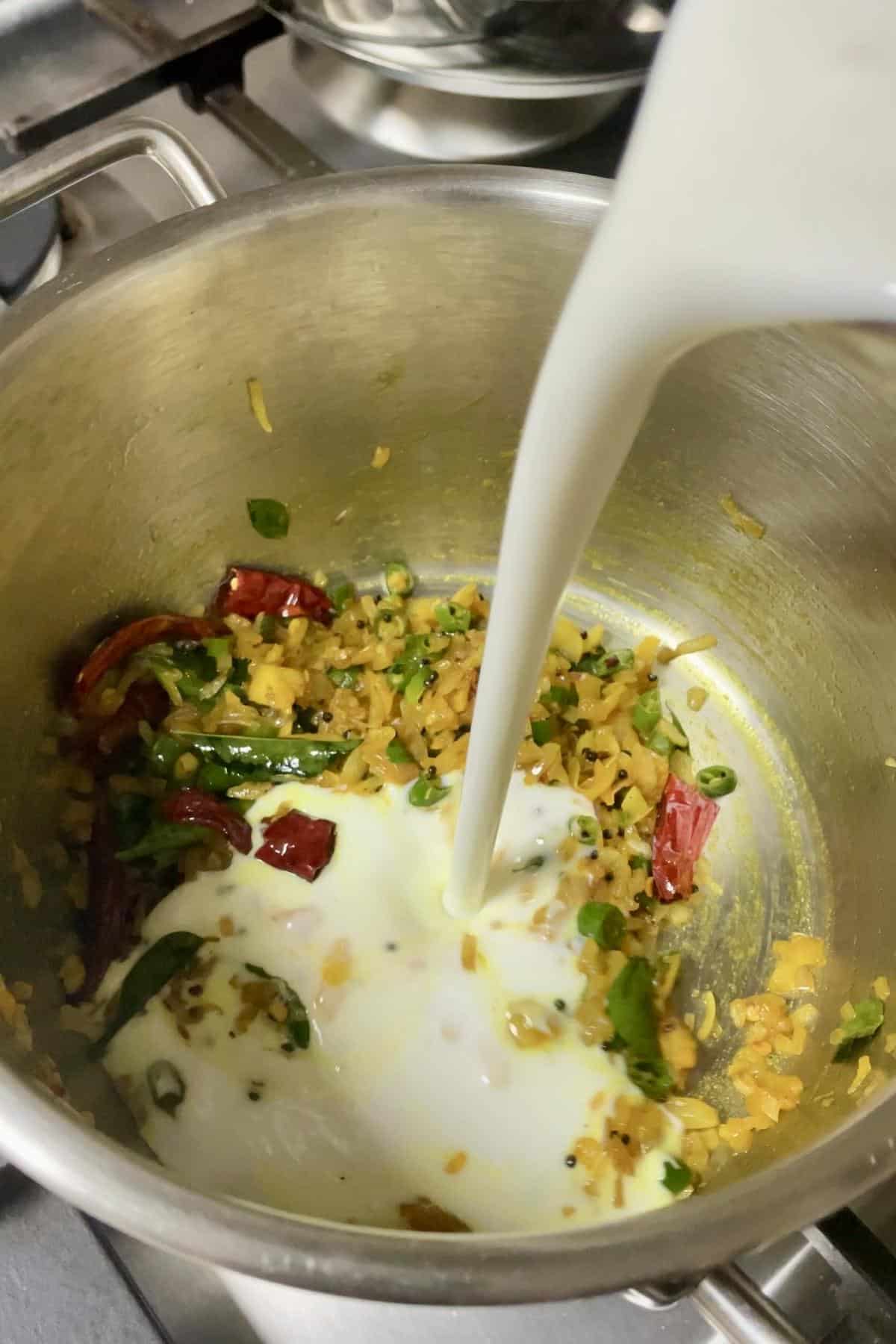
This is the crucial moment. Turn the heat off, pour the buttermilk or prepared yoghurt and stir well.
Step 6: Warm it through gently
Turn the heat back on to the lowest setting. Stir continuously and watch for the curry to turn a uniform pale yellow. The moment you see light steam rising from the surface, switch off immediately. Remove the pot from the hob. Boiling will curdle and split the curry. It should be gently warmed through, not cooked.
Step 7: Serve immediately
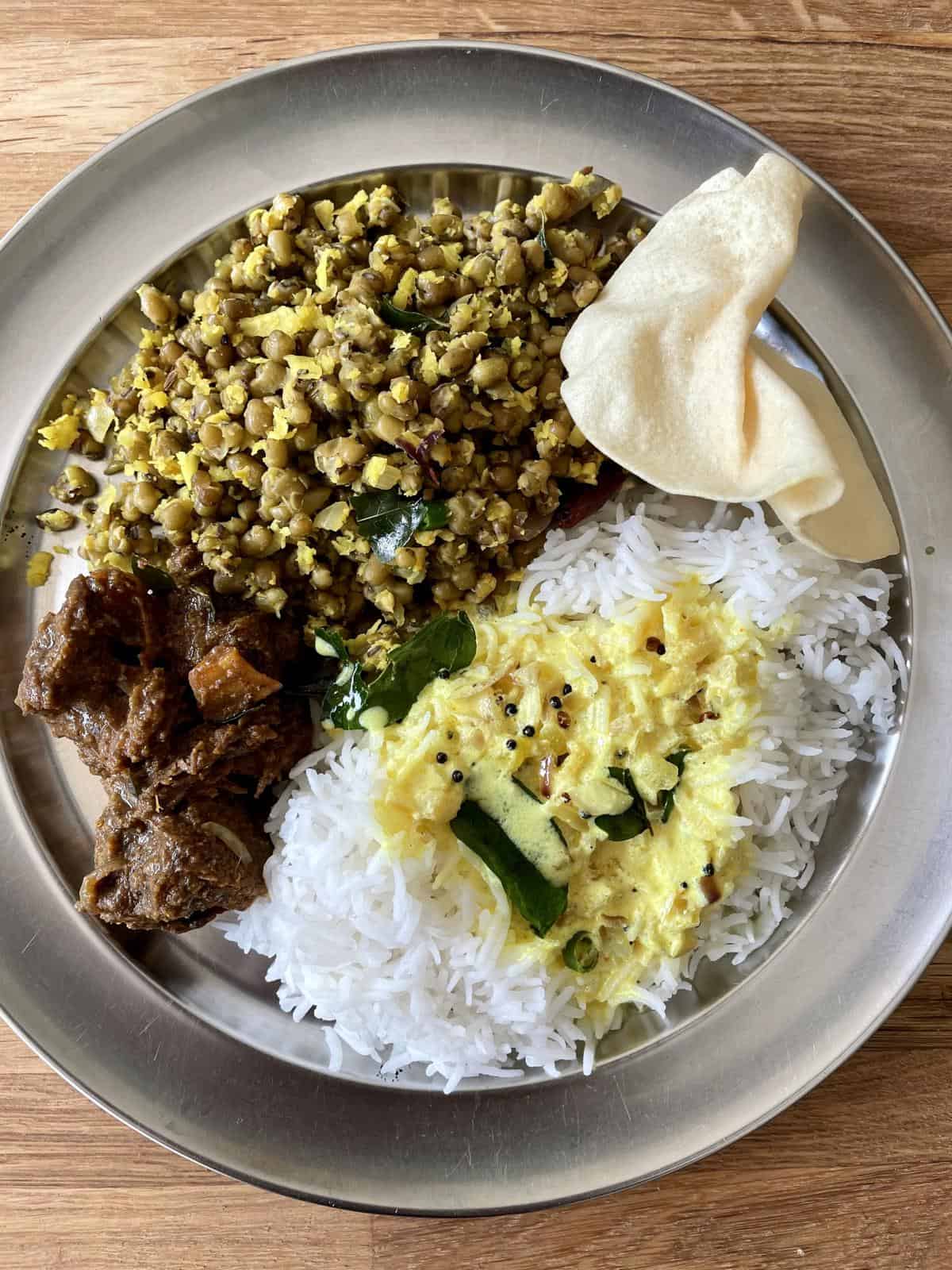
Ladle over warm steamed white rice. Serve alongside a Kerala beef fry and a simple payar thoran or cabbage poriyal for a full, satisfying South Indian comfort lunch. And like always, we need pappadam!
Curdled?
This can happen to anyone, but don't discard it just yet. If it looks slightly grainy, remove from the heat immediately and whisk vigorously; it can often come back together. It won't be as silky as a freshly made batch, but it is still perfectly good to eat. Prevention is always easier; room-temperature buttermilk is your best insurance against splitting. Here's why that happens.
Moru Curry Serving Ideas
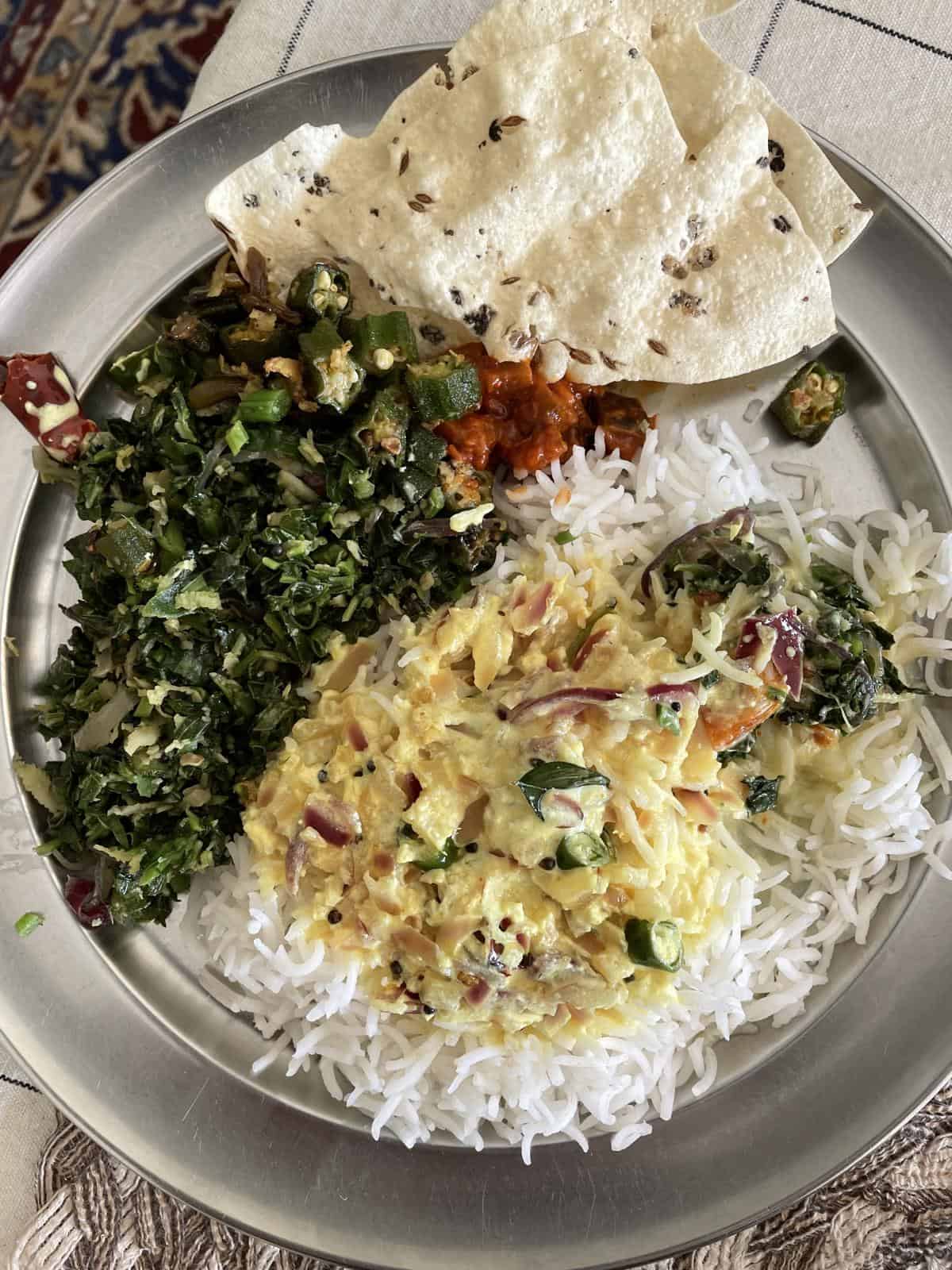
Traditionally paired with hot matta rice, though in our home, it is always white rice. A spicy mango or lime pickle on the side, and honestly, that is all you need. But a little protein never hurts; pair it with a spicy beef fry, Mutta Roast, or a simple fish fry for a proper Kerala comfort meal. I always add a Cheera thoran or poriyal for a simple vegetable side. And if you want to go full South Indian spread, a simple rasam for seconds never disappoints.
Related Recipes
- Love a good yoghurt-based curry? Try this Lauki Yoghurt Curry next.
- Make a bowl of Kumbalanga Parippu Curry for a full Kerala sadya-style spread.
Storage & Reheating
Moru curry is best enjoyed fresh, ideally straight off the stove while it's still warm and silky. That said, leftovers can be stored in an airtight container in the refrigerator for up to 1 day.
When reheating, bring it to room temperature, then pour it into a saucepan on the lowest heat setting and stir continuously. Stop the moment you see the faintest wisps of steam rising. Do not let it boil!
Moru Curry Questions, Answered
Yes, but the flavour will be milder and less tangy. The sourness in sour curd or laban is what gives moru kachiyathu its signature flavour. If using regular yoghurt, let it sit at room temperature for a few hours first to develop sourness.
Moru curry is best made fresh and served immediately, as it does not hold well. If you need to prep ahead, you can sauté the onions, ginger, chillies, and spices in advance and store the cooked base in the fridge. When ready to serve, reheat the base, turn off the heat, and add the room-temperature buttermilk. This way, you get a fresh, silky curry in a jiffy.
Still have questions? Ask away in the comments, I am happy to help!
Enjoyed this Recipe?
Did you know that commenting and rating recipes is one of the best ways to support your favourite food bloggers? If you tried this recipe, please leave a review in the comments with your ⭐️⭐️⭐️⭐️⭐️ rating. Your feedback helps my small business keep offering free, high-quality recipe content. It is the best way to help me thrive in an increasingly competitive AI world.
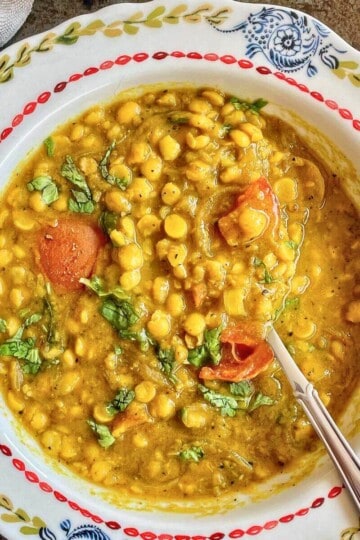
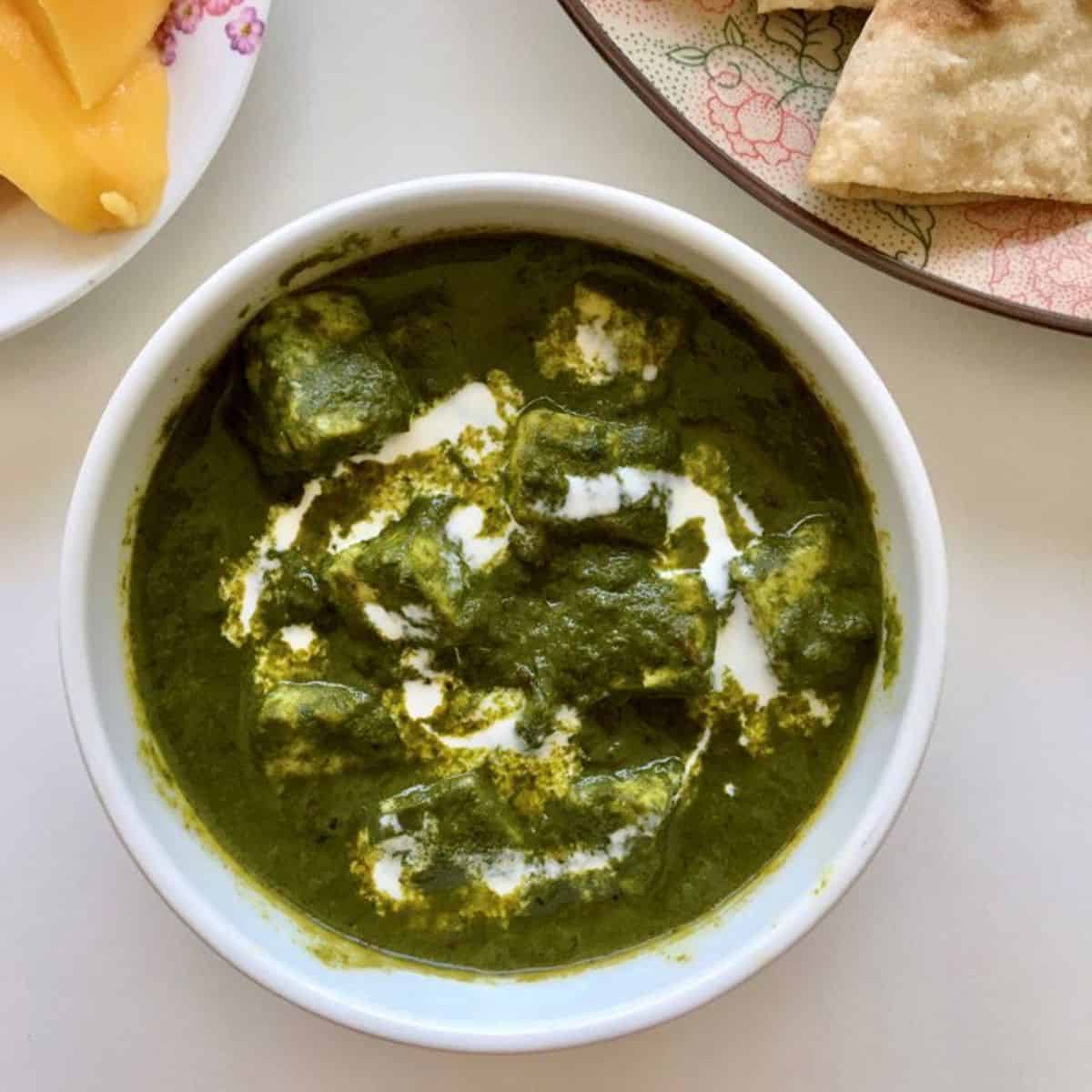
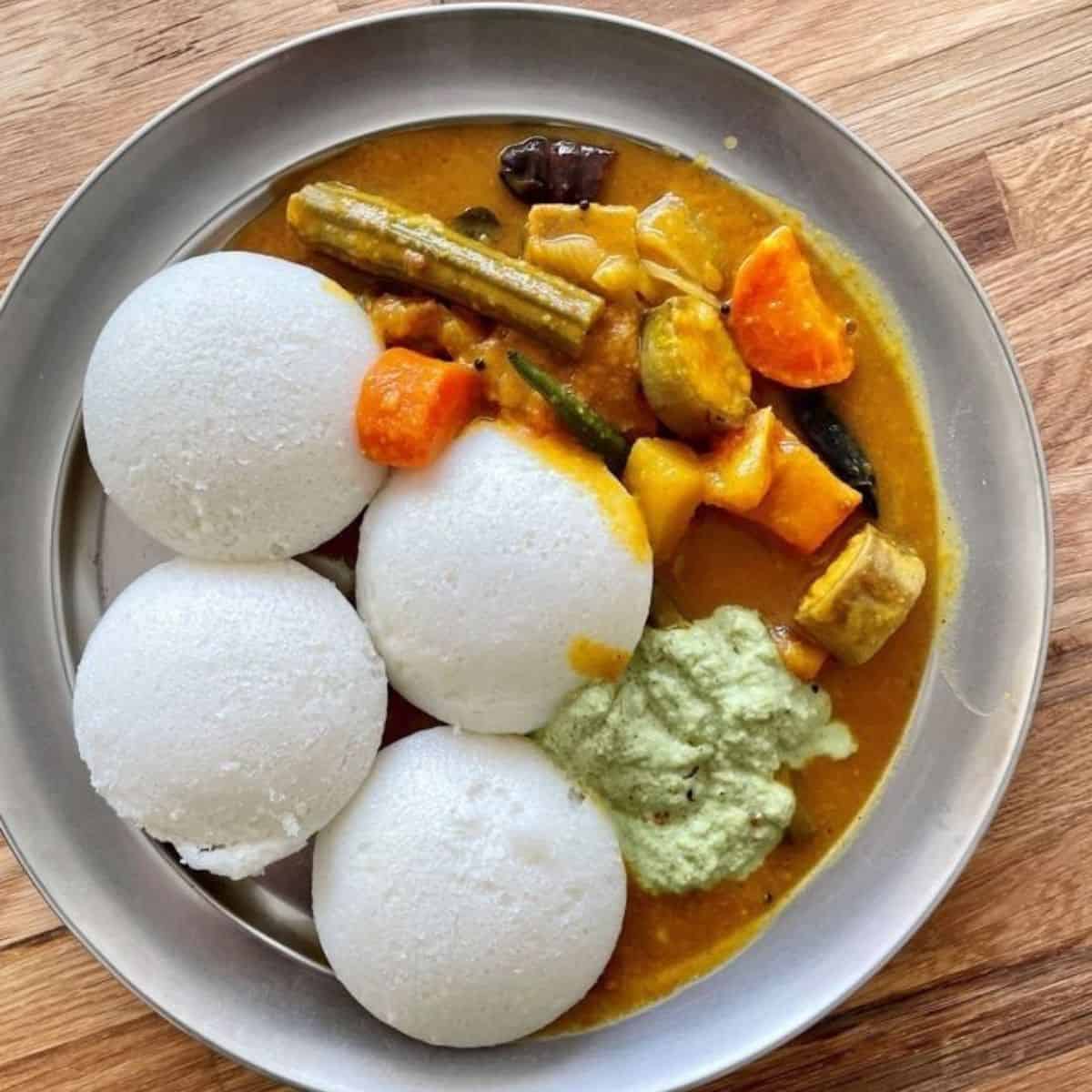
More Vegetarian Curry Recipes
Looking for other recipes like this? Try these:

📖 Recipe Card
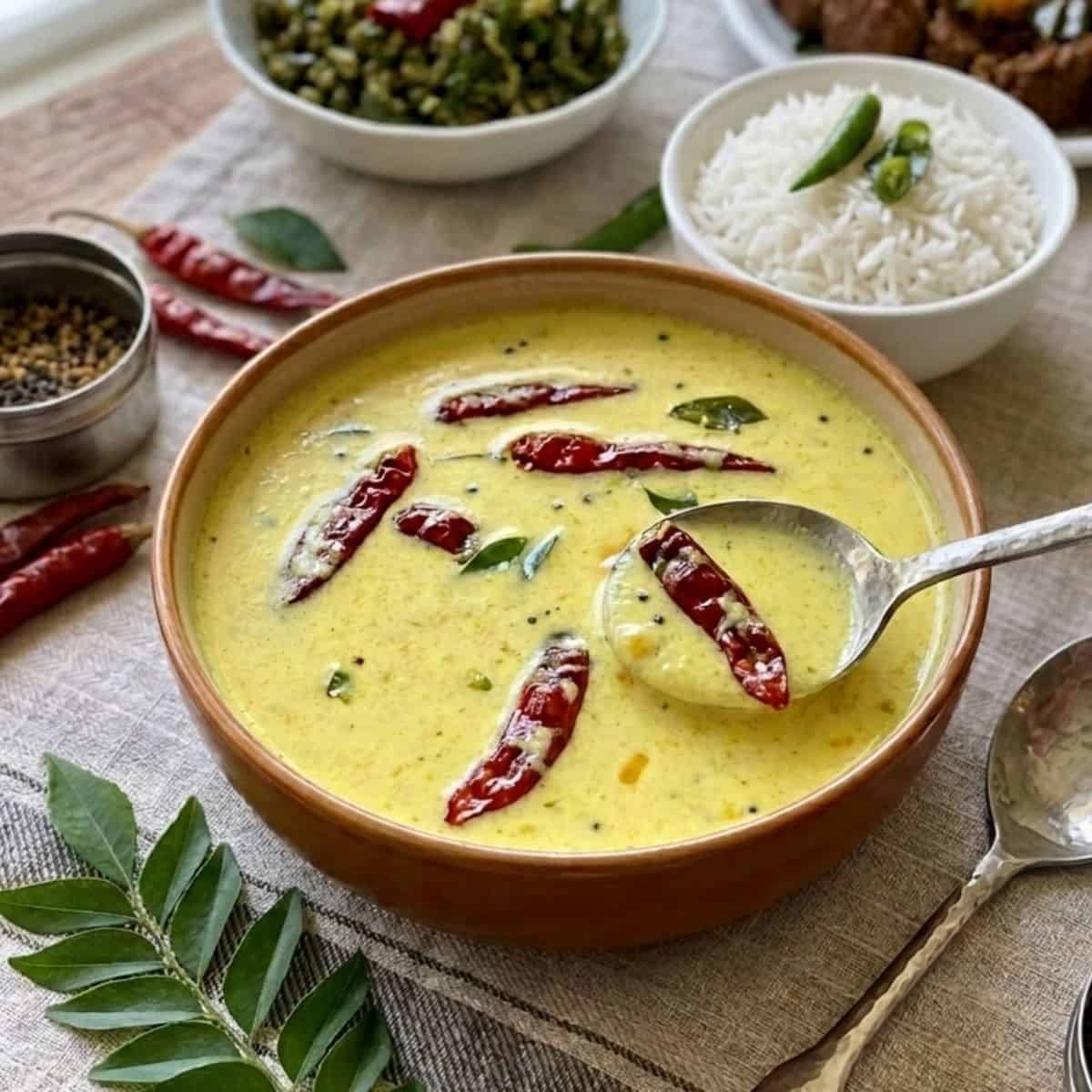
Moru Curry without Coconut (Buttermilk Curry)
Equipment
- 1 Saucepot, 16-18 cm, or 1.5 to 2.5 L pot
Ingredients
- 1 tablespoon coconut oil
- 1 teaspoon mustard seeds
- ¼ teaspoon fenugreek seeds
- 3 to 5 dried red chillies
- 1 small onion, finely diced (or 5-6 mini shallots)
- 2 teaspoon ginger, finely minced
- 3 to 5 green chillies, finely chopped
- 1 sprig of curry leaves
- ½ to ¾ teaspoon turmeric powder
- Salt to taste
- 500 ml buttermilk, full-fat, room temperature (see notes)
Instructions
- Bring the buttermilk to room temperature before starting. If using bottled laban, shake well. If using thick curd, whisk 1 cup curd with 1 cup water until smooth. Prep all ingredients before heating the pan: mince the ginger, chop the chillies, dice onions.
- Heat the coconut oil in a small deep saucepot on low to medium heat. Add mustard seeds, let them splutter. Then add fenugreek seeds, dried red chillies, and a few curry leaves. Fry for a few seconds.1 tbsp coconut oil1 tsp mustard seeds¼ tsp fenugreek seeds3 to 5 dried red chillies1 sprig of curry leaves
- Add onions and sauté until soft, translucent, and lightly golden at the edges.1 small onion finely diced (or 5-6 mini shallots)
- Add ginger, green chillies and salt; sauté for a minute. Reduce the heat to low. Add turmeric powder; stir for a few seconds.2 tsp ginger finely minced3 to 5 green chillies finely chopped½ to ¾ tsp turmeric powderSalt to taste
- Turn off the heat. Pour in the room-temperature buttermilk and stir well. Season with more salt, if necessary.500 ml buttermilk full-fat, room temperature (see notes)
- Turn the heat back on to the lowest setting. Stir continuously until the curry is warmed through and uniformly yellow. The moment you see light steam, switch off immediately. Do not boil.
- Serve immediately with hot steamed rice, any south-Indian beef or chicken sides and veg stir-fries.
Notes
- Nutrition values are estimates and will vary based on the brand of laban or curd used.
- Buttermilk options: Bottled laban works perfectly and is the easiest option. Alternatively, whisk 1 cup of thick sour curd with 1 cup of water until completely smooth. The sourer the curd, the more flavourful the curry. Room temperature is non-negotiable.
- Salt early: Adding salt when sautéing the onions helps them soften faster and seasons the base evenly before the buttermilk goes in.
- Never boil: This is the single most important rule. The moment you see steam rising, turn off the heat.
- Make it spicier: Increase the green chillies or dried red chillies up to 6-7 for a fierier moru curry.
- Leftovers: Refrigerate and consume within 1 day. Reheat very gently on the lowest heat, stirring continuously, and stop well before it boils.
Nutrition Info
Nutritional information is an estimate provided for informational purposes only. Values may vary based on ingredient brands, cooking methods, and portion sizes.

Comments
No Comments