

My kalathappam recipe is made in a small 2-litre pressure cooker and makes just enough for us to enjoy with chai for over the next couple of days. Soft inside and crisp edges, this sweet rice cake is flavoured with cardamom, shallots and coconut, and sweetened with jaggery.
A traditional Malabari Kannur special tea-time snack, kalathappam, can be tricky even for the experts, so let's be kind to ourselves. 😊
Quick Look: Kalathappam Recipe
What is it: A Malabari sweet rice batter cake sweetened with jaggery and cooked in a small cooker pot.
Why you'll love it: It is a unique sweet snack with savoury notes from shallots and cumin. Can pass off as a dessert! No oven required!
How to make it: Grind the rice batter, sweeten with warm jaggery, pour into a hot pot, top with fried items and steam-cook gently until set.
SUMMARIZE & SAVE THIS CONTENT ON
Reader Review
I had shared this kalathappam recipe on Instagram Stories, and surprisingly, many of them recreated it with success for the first time!
"Tried your kalthappam today. Came out well…tasty! Happy it wasn't a fail." - Instagram Follower
Jump to:
📖What is Kalathappam?
Kalathappam is a traditional North Kerala (Malabar region) rice cake made on the stovetop. It has sweetness from jaggery, balanced by savoury notes from fried shallots and coconut on top. The texture is soft, fluffy, and slightly spongy. While the sweet version is the most common, kalathappam is also made in savoury variations across Kerala.
🛒Notes on Ingredients
What is kalthappam made of?
- Rice: I have used basmati for this batch. You can use any raw rice; Jeerakasala or kaima rice gives more flavour. Use only after soaking for at least 4 to 6 hours or overnight.
- Cooked rice: Adding cooked rice helps the batter achieve a smooth consistency and adds tenderness, preventing the cake from turning rubbery. If you don't have cooked rice, use aval or poha. Just wet it enough to hydrate it.
- Jaggery: Use good-quality cane jaggery. Melt and strain if needed.
- Coconut oil, shallots & coconut bits: These aren't optional garnish. They're the soul of the sweet kalathappam recipe, giving it the aromatic, savoury taste that balances the sweetness.
- Cumin seeds
- Baking soda
Refer to the Recipe Card at the bottom of this page for a complete list of ingredients and quantities.
🔪 How to make Kalathappam
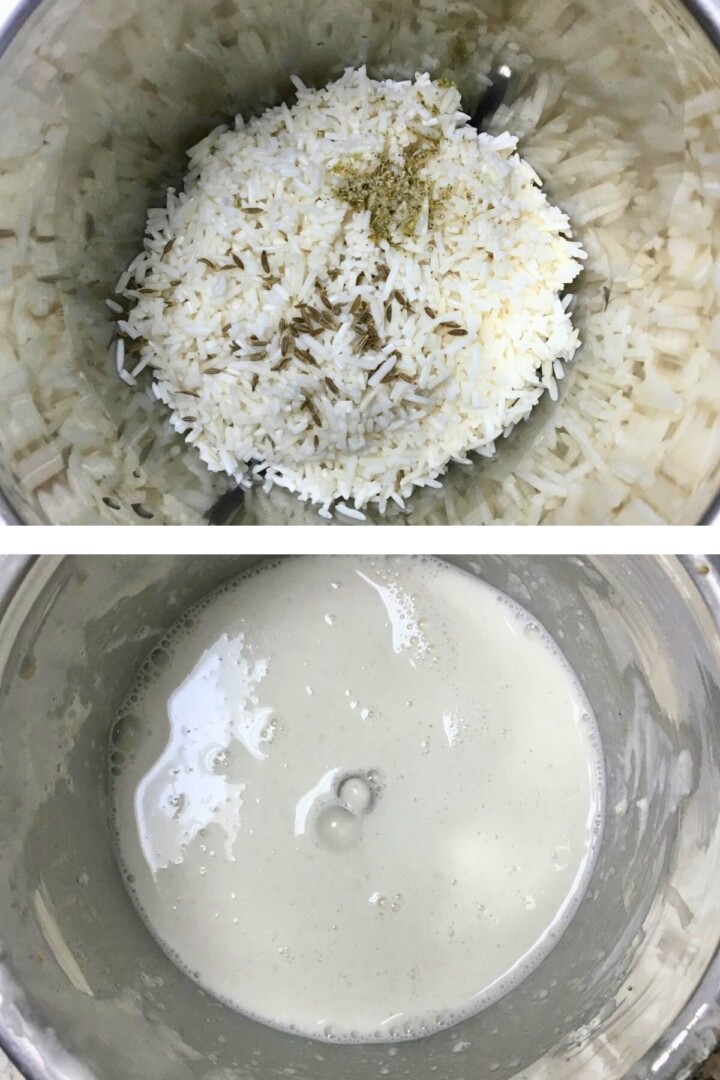
Soak & Grind the batter
Grind the soaked rice, cooked rice (or aval), cardamom, cumin and salt with a little water into a smooth, pourable batter.
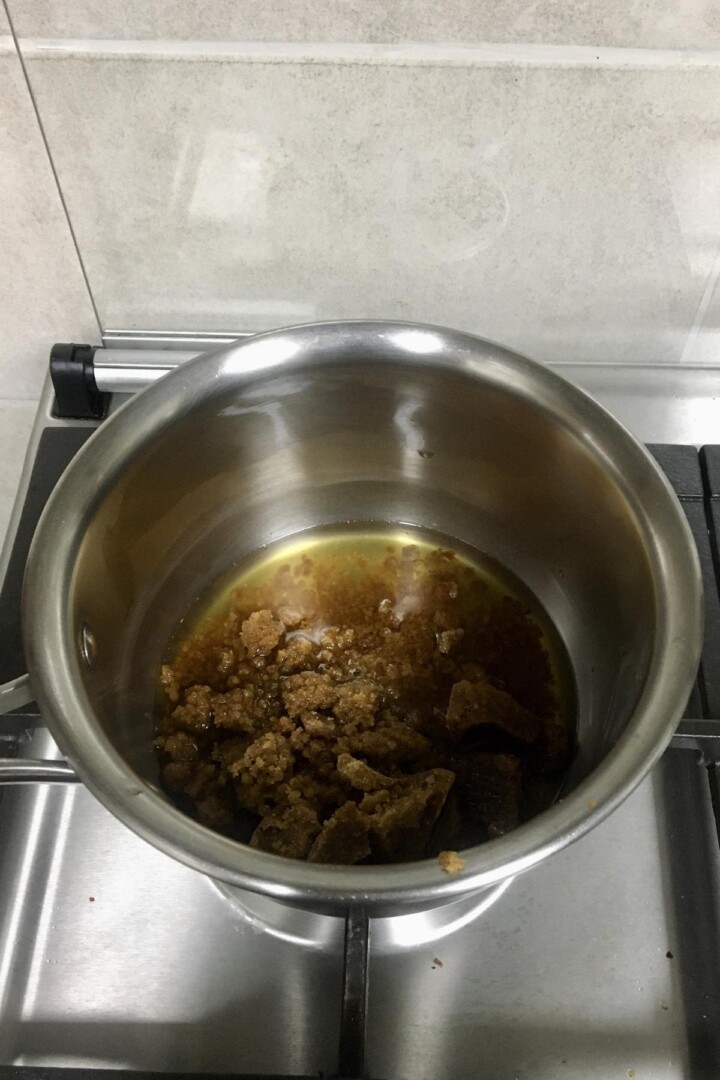
Melt the Jaggery
Melt jaggery with water over medium heat until fully dissolved. Keep it warm.
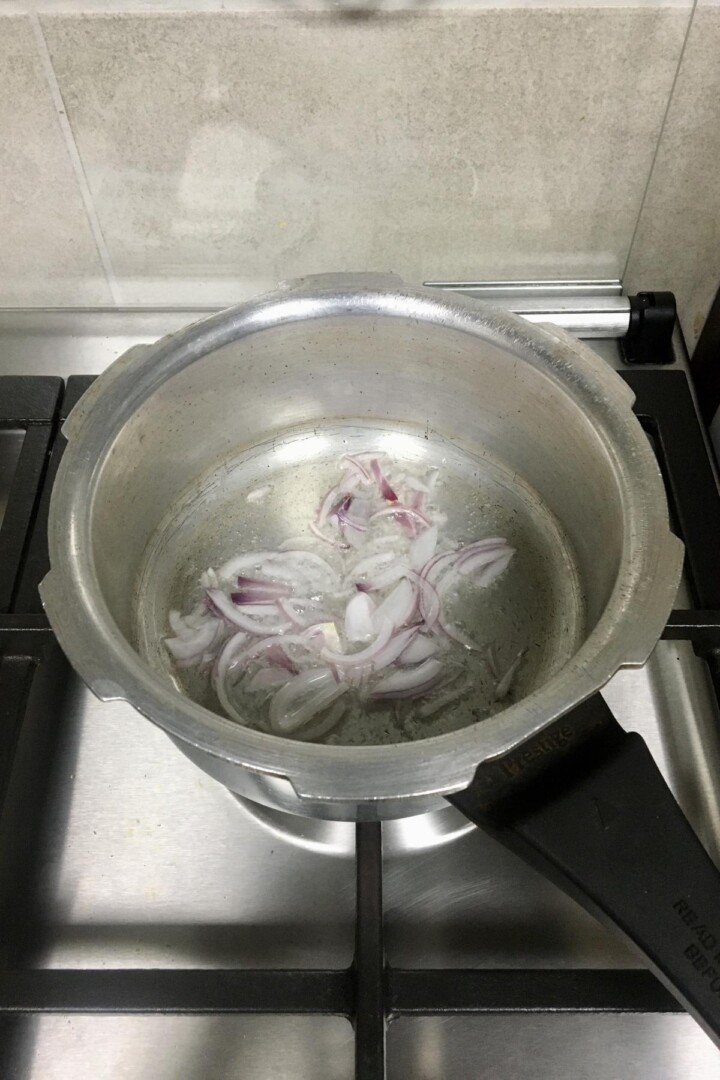
Fry the toppings
While the jaggery is melting, you can do this step. In a 2-litre pressure cooker pot, heat coconut oil and sauté finely chopped shallots or onion until golden. Remove. Fry coconut pieces until lightly crisp. Remove. Lower the heat.
Combine the batter and jaggery
Slowly pour the warm jaggery syrup into the bowl of batter in a thin stream, stirring continuously. Stir in salt and a pinch of baking soda.
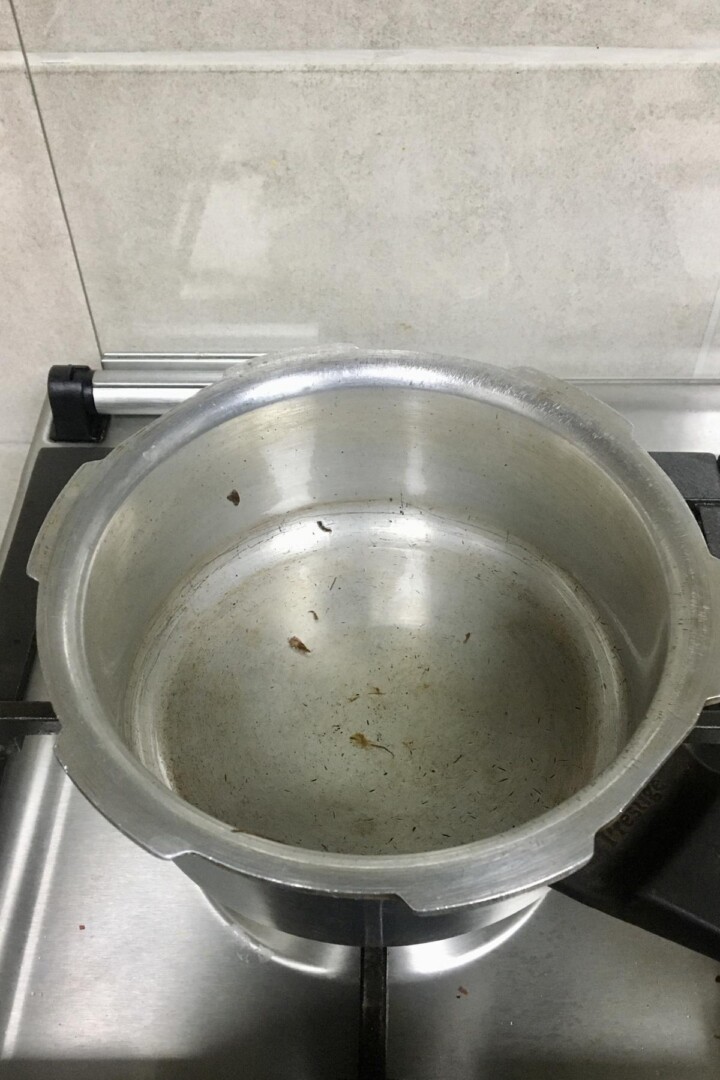
Heat the pan
Add more coconut oil if needed. Turn the heat to medium-high until hot. Hover your palm to check the warmth.
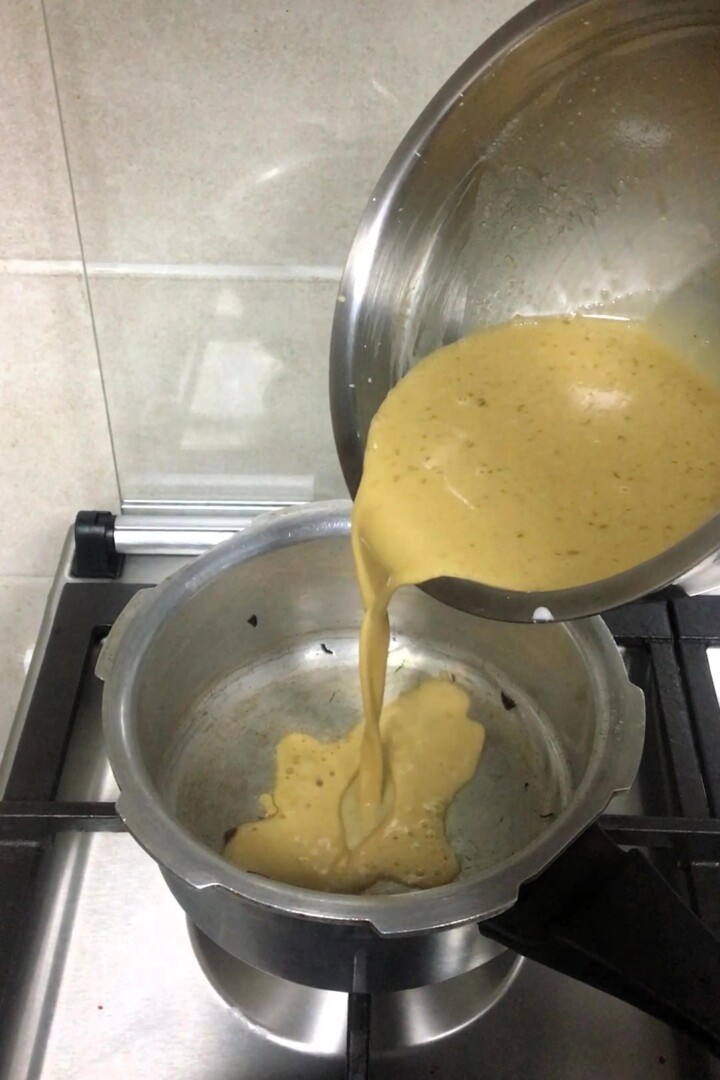
Pour the batter
Pour the batter from a slight height into the hot cooker pan. Sprinkle the fried shallots and coconut pieces.
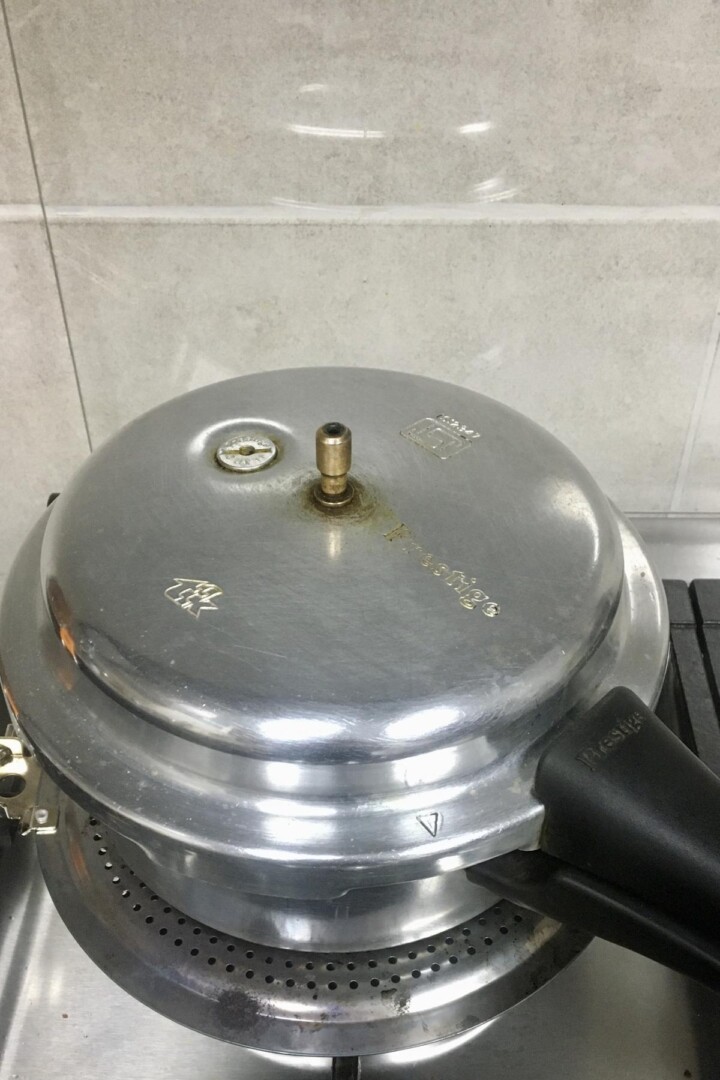
Cook the kalathappam
Cover with the lid (remove the cooker weight). Cook on high for 1 minute, then reduce to low. Cook for another 15 minutes. You will see water droplets spouting out of the nozzle. Switch off. Do not open. Rest for 15 minutes.
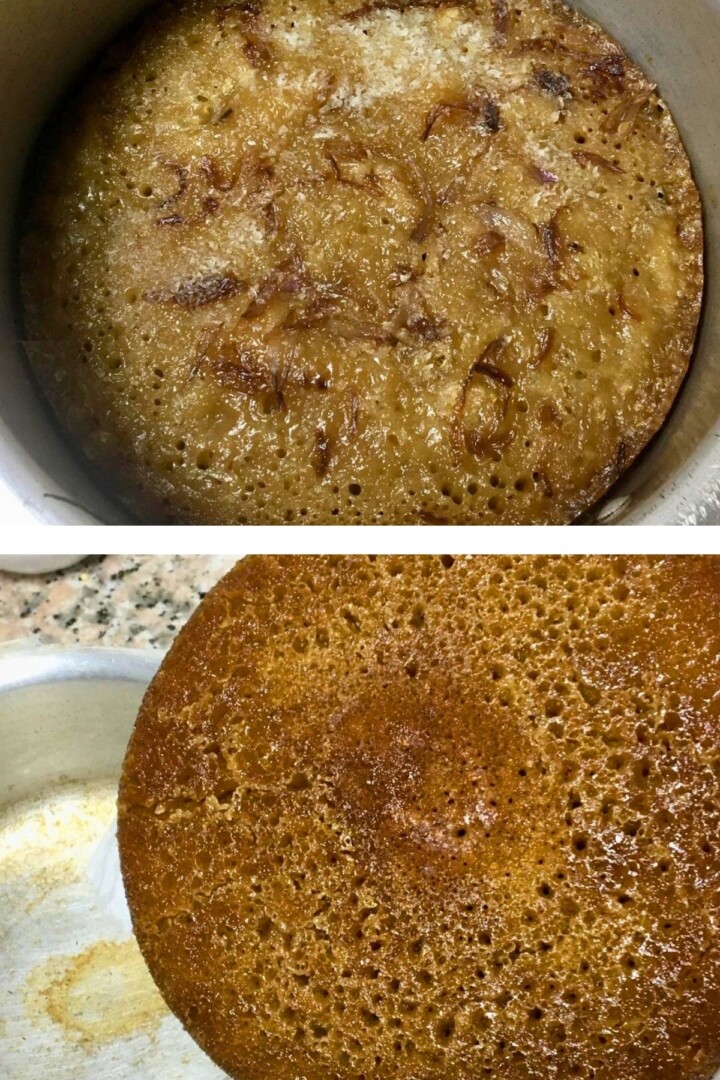
Release and serve
Gently loosen with a spatula or flip carefully. Slice and serve warm.
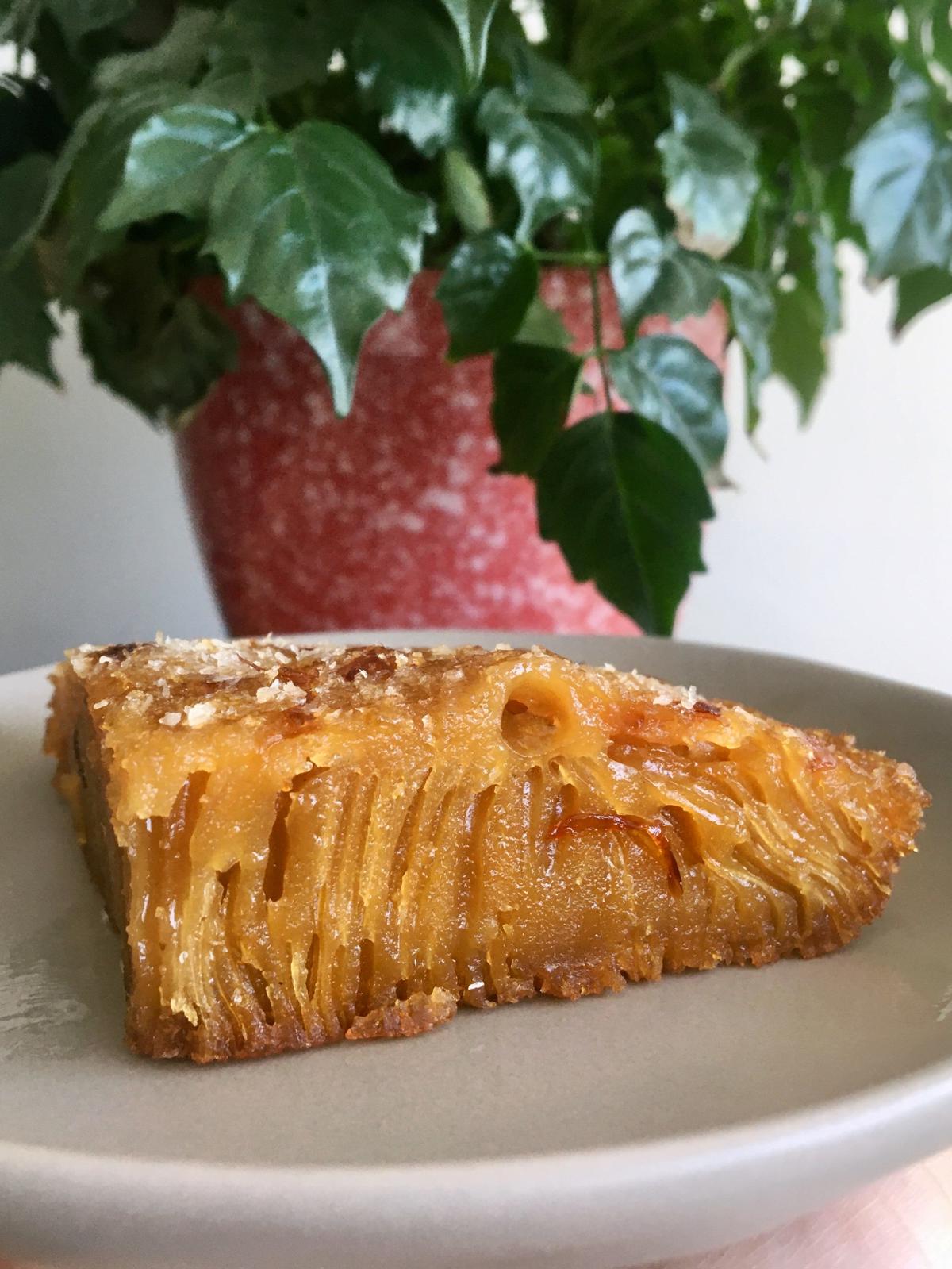
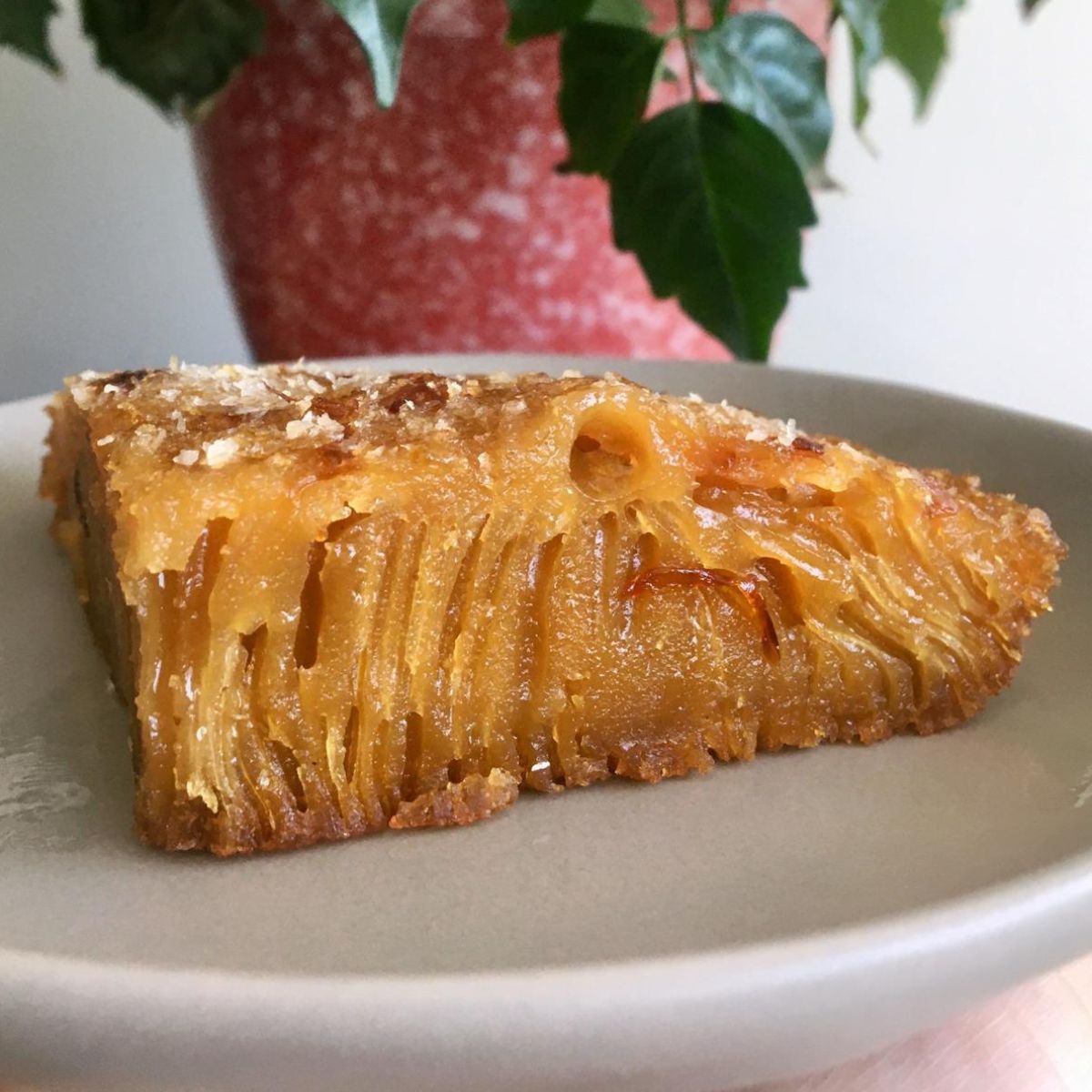
The Signature "Icicle" Crumb
When you slice into a well-made kalathappam, you should see vertical air pockets that resemble delicate icicles. These lines are the hallmark of proper aeration. They form when steam and air bubbles trapped in the batter rise rapidly during the initial high-heat phase, pushing upward as the cake sets.
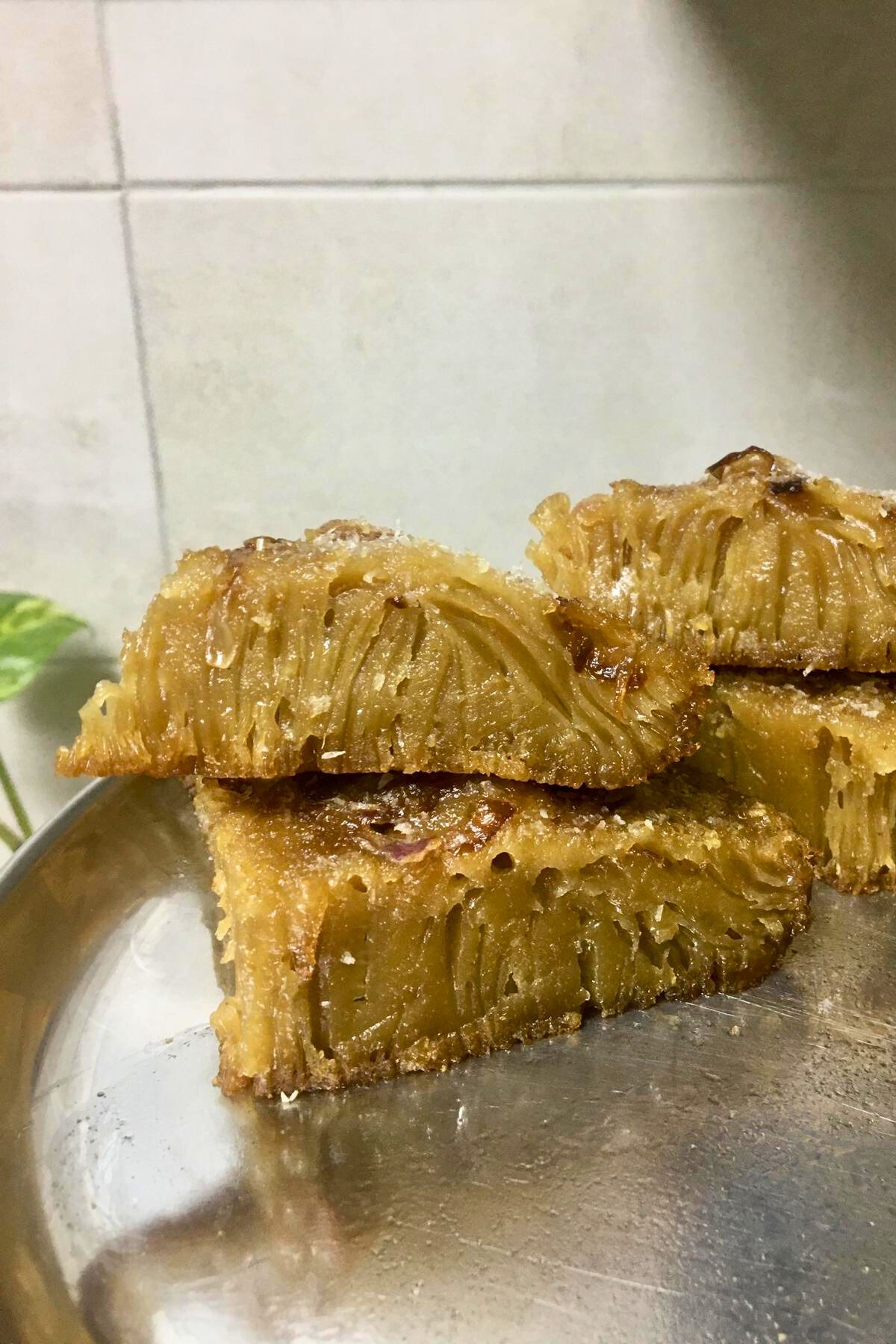
👩🏽🍳Visual Signs of a Perfectly Made Kalathappam
- A deep brown and caramelised crust with a slight crunch.
- A porous base where the batter first met hot oil and sizzled.
- Distinct "icicle" lines running from the bottom to the top, showing that the heat was strong enough to lift and aerate the batter as it cooked
- The crumb should be soft, spongy, and moist, never heavy or gummy. A dense texture usually means the heat was too low or the batter did not get enough initial lift.
💡Serving Suggestions
- Kalathappam is best served with my Chai for a perfect evening pairing.
- Add it to a Malabar snack spread alongside kaipola, chatti pathiri, unnakai and unni appam.
- If serving with breakfast, make my appam or a steamed plate cake.
❄️Storage & Reheating
Keep leftover kalathappam in an airtight container at room temperature for up to 2 days, or refrigerate for up to 4-5 days. Make sure it has cooled completely before storing to prevent condensation and sogginess.
Reheat using Steaming: Steam slices for 5-7 minutes or until warm. The best way to revive its soft, spongy texture.
🥣Equipment
The best results came from using a 2-litre pressure cooker pot. I then tested baking this recipe in the oven in a cast-iron skillet, but it did not have the signature texture. I plan to test it again.
🍲More Sweet Snack Recipes
Looking for other recipes like this? Try these:

Enjoyed this Recipe?
Did you know that commenting and rating recipes is one of the best ways to support your favourite food bloggers? If you tried this recipe, please leave a review in the comments with your ⭐️⭐️⭐️⭐️⭐️ rating. Your feedback helps my small business keep offering free, high-quality recipe content. It is the best way to help me thrive in an increasingly competitive AI world.
📖 Recipe Card
Kalathappam Recipe (Small Batch Cooker Appam)
Ingredients
Grind for batter:
- ½ cup raw rice, soaked overnight (see notes)
- 1 tablespoon cooked rice
- ¼ teaspoon cardamom powder
- ¼ teaspoon cumin seeds
- ½ cup water
- salt to taste
- 1 pinch baking soda
Melt:
- 150 grams jaggery, (2 to 3 blocks) (cane sugar)
- ¼ cup water
Fry:
- 2 tablespoons coconut oil
- 3 to 4 mini shallots
- 2 tablespoons coconut slices
Instructions
- Add the drained rice, cooked rice, cardamom powder and cumin seeds to a mixie grinder. Grind to a smooth batter using ¼ cup water first, then add the remaining water gradually as needed.½ cup raw rice soaked overnight (see notes)1 tablespoon cooked rice¼ teaspoon cardamom powder¼ teaspoon cumin seeds½ cup water
- In a saucepot over medium heat, melt the jaggery with water until completely dissolved. Switch off and keep it warm.150 grams jaggery (2 to 3 blocks) (cane sugar)¼ cup water
- Heat the coconut oil in a 2-litre pressure cooker pot. Sauté the finely diced shallots until lightly golden. Remove and set aside. Fry the coconut pieces until lightly crisp, then remove and set aside. Reduce the heat to low until we get the batter ready.2 tablespoons coconut oil3 to 4 mini shallots2 tablespoons coconut slices
- Slowly pour the warm, melted jaggery into the bowl of prepared rice batter in a thin stream, stirring continuously with the other hand. Stir in salt and a pinch of baking soda.1 pinch baking sodasalt to taste
- Add more coconut oil to the pot if needed. Increase the heat to medium-high and allow the pot to heat well. Hover your palm over the pot to check that it is properly hot.
- Pour the batter carefully from a height into the hot pot. Sprinkle the fried onions and fried coconut. Cover the pot with the heavy lid. Don't forget to remove the weight aka pressure cooker regulator.
- Cook on high heat for a minute and then reduce to low. Cook for 15 to 18 minutes. Switch off and remove the pot from the stove. Do not open. Let it rest for another 15 minutes.
- Open the lid and gently remove the kalathappam using a spatula, or carefully flip it out. Slice and serve. Store in an airtight container.
Notes
- You can use any raw rice or basmati, jeerakasala/ kaima, etc. The water required to grind may vary a little.
Nutrition Info
Nutritional information is an estimate provided for informational purposes only. Values may vary based on ingredient brands, cooking methods, and portion sizes.
As always, leaving you with a good read suggestion about Malabar Cuisine.

Famidha Ashraf says
I love how this kalathappam came out with using just a small cooker! Please give it a try and let me know how yours turned out in the comments!