

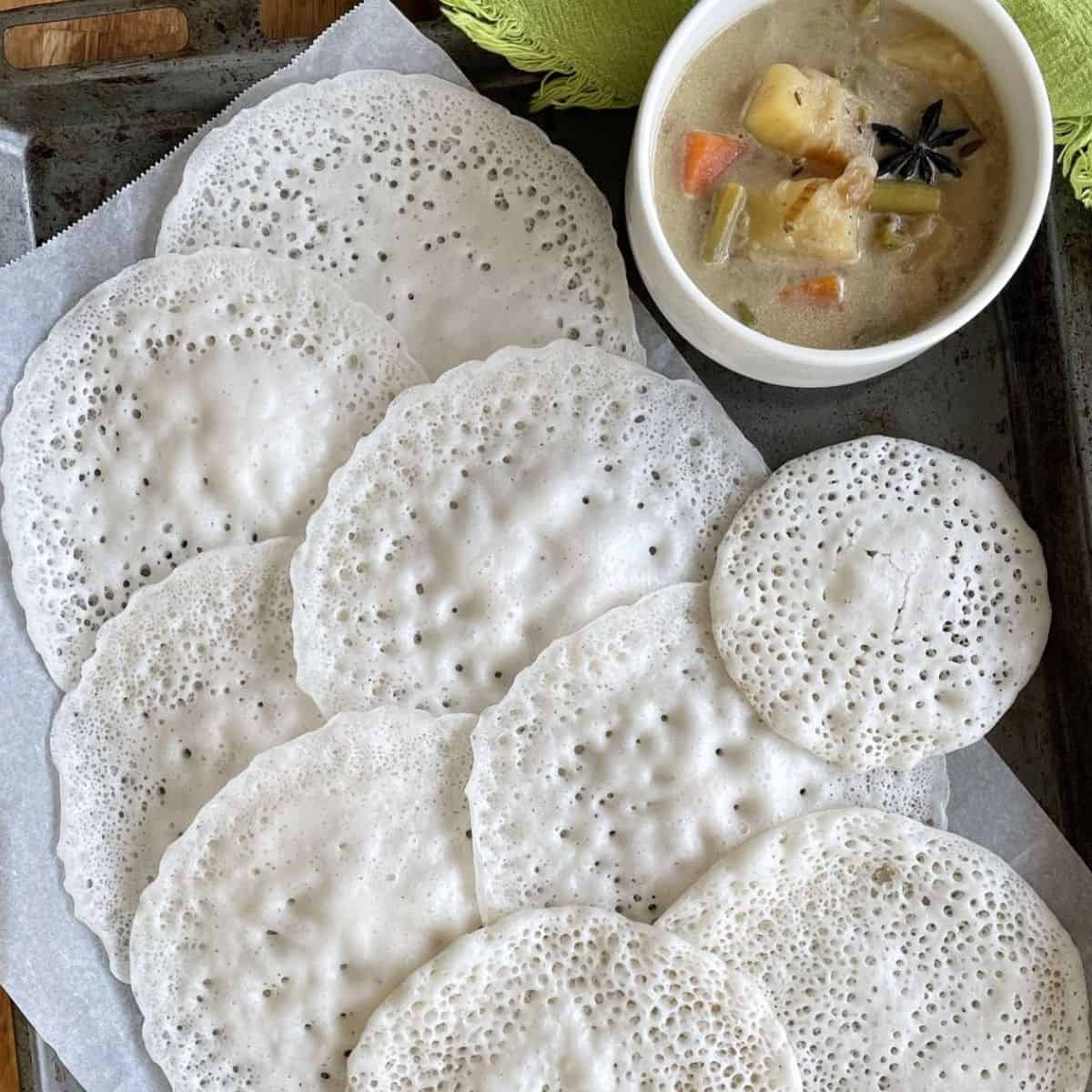
Vellayappam: Think soft, pillowy, porous appams with no crispy edges, perfect for soaking up your favourite ishtu or a sweet splash of milk and banana. Let me show you how I make vellayappam recipe with yeast, no coconut milk, no toddy, and no fancy pans required!
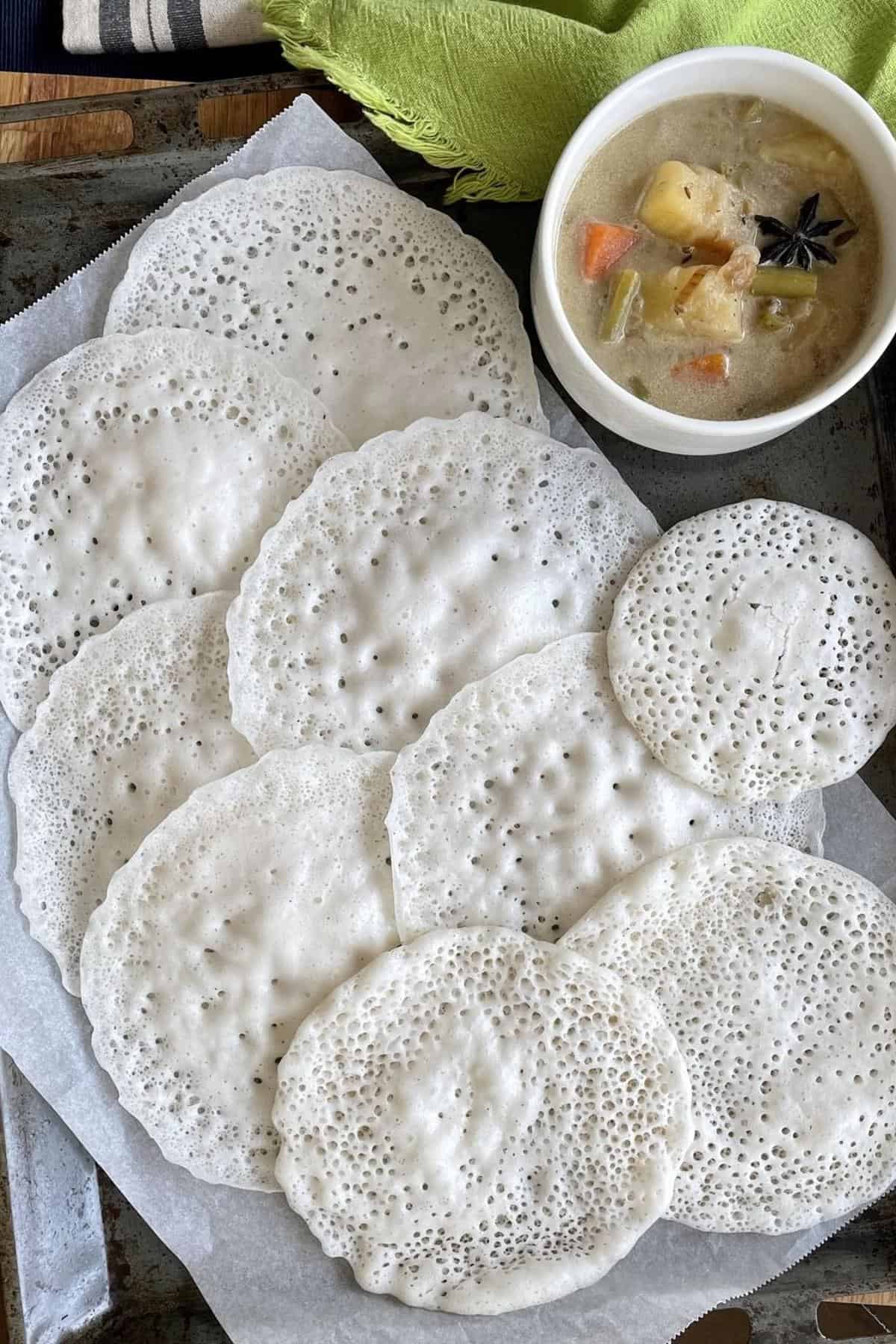
I used to make appam using a recipe handed down by a dear friend from Kottayam. It's the version I grew up eating and loving. But the internet made me second-guess it. Even though I've enjoyed this all my life, I just couldn't bring myself to share it here - until now.
Why, you ask?
Because appam is such a broad term! And thanks to Instagram, most people now picture only the bowl-shaped, soft white appam with lacy, crispy edges. Am I right? For the longest time, I believed that was the "real" appam, and everything else fell short.
Not anymore.
To save myself from being trolled for sharing an appam that doesn't match viral standards, I did some digging. That's when I learned this version has a name of its own: vellayappam. And that's exactly what I'm sharing with you today.
Jump to:
What Is Vellayappam?
I must say, it took me years to understand the difference because we grew up calling them just appam.
Vellayappam (also known as kallappam) is a soft, spongy appam made with a fermented rice and coconut batter. Unlike palappam, which is thin and lacy on the sides, vellayappam is thick, spongy and porous - ideal for soaking up flavour-packed coconut milk stew.
🛒Ingredients
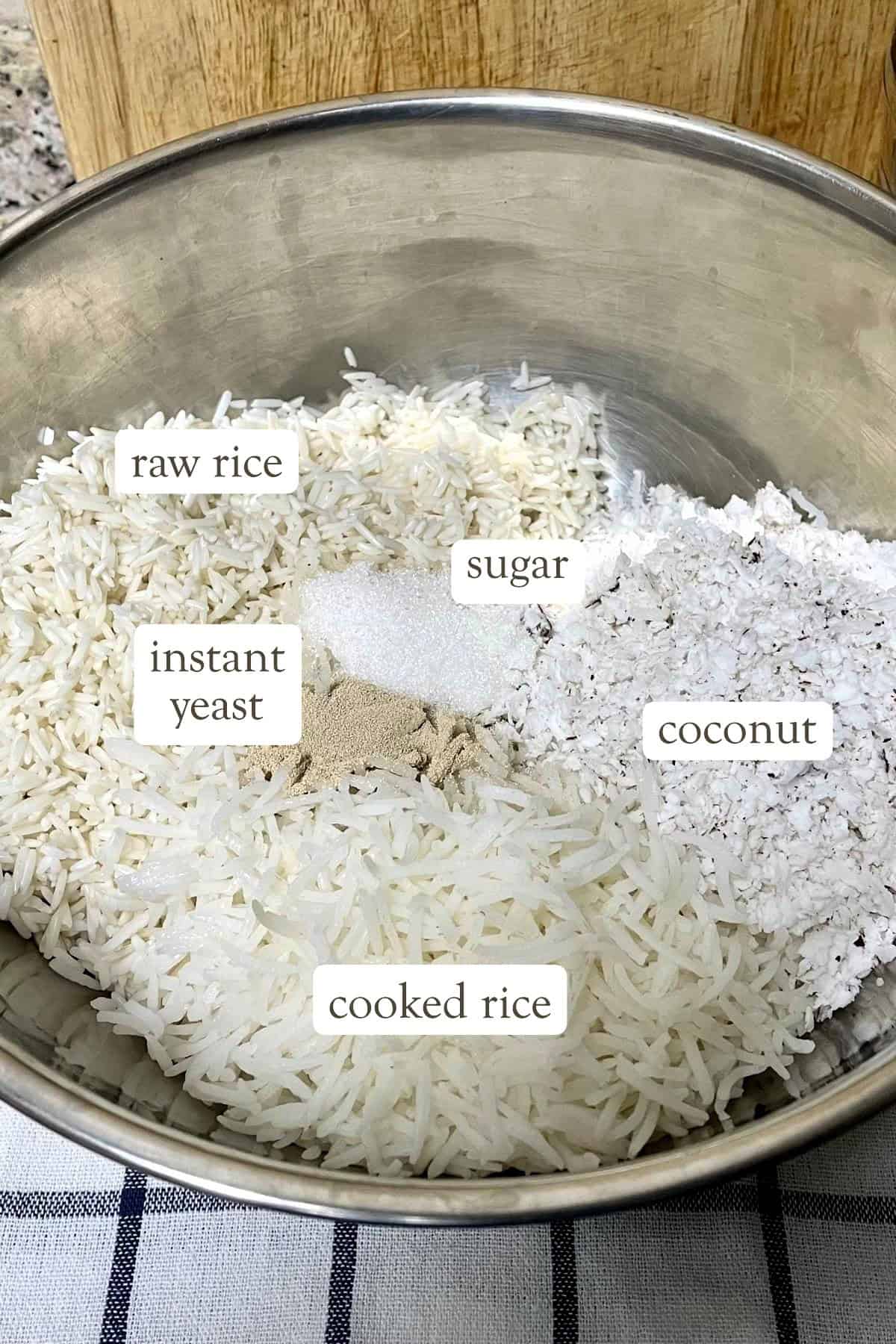
- Raw rice: Use short-grain raw rice that is labelled as pachari.
- Cooked rice: Previously cooked rice - I use basmati, so that is what I always have handy. You may use any kind of cooked rice or poha (rice flakes).
- Grated coconut: fresh or frozen, but thawed completely to room temperature.
- Instant yeast
- Sugar
- Water
- Salt
Refer to the Recipe Card at the bottom of this page for a complete list of ingredients and quantities.
🔪How to Make Vellayappam - Step by Step
If you're aiming for that classic vellayappam look and feel, I highly recommend using a well-seasoned dosa pan. That said, I also loved the mini versions made in my paniyaram (appe) pan! This batter can also be used in the classic appam chatti.
For detailed instructions on how to make the recipe, please refer to the printable recipe card below.
Timeline: I soak the raw rice in the morning, so it is ready to grind in the evening and can ferment overnight. This way, I have the batter ready to use for breakfast the next morning! Adjust the timeline according to your needs and the season.
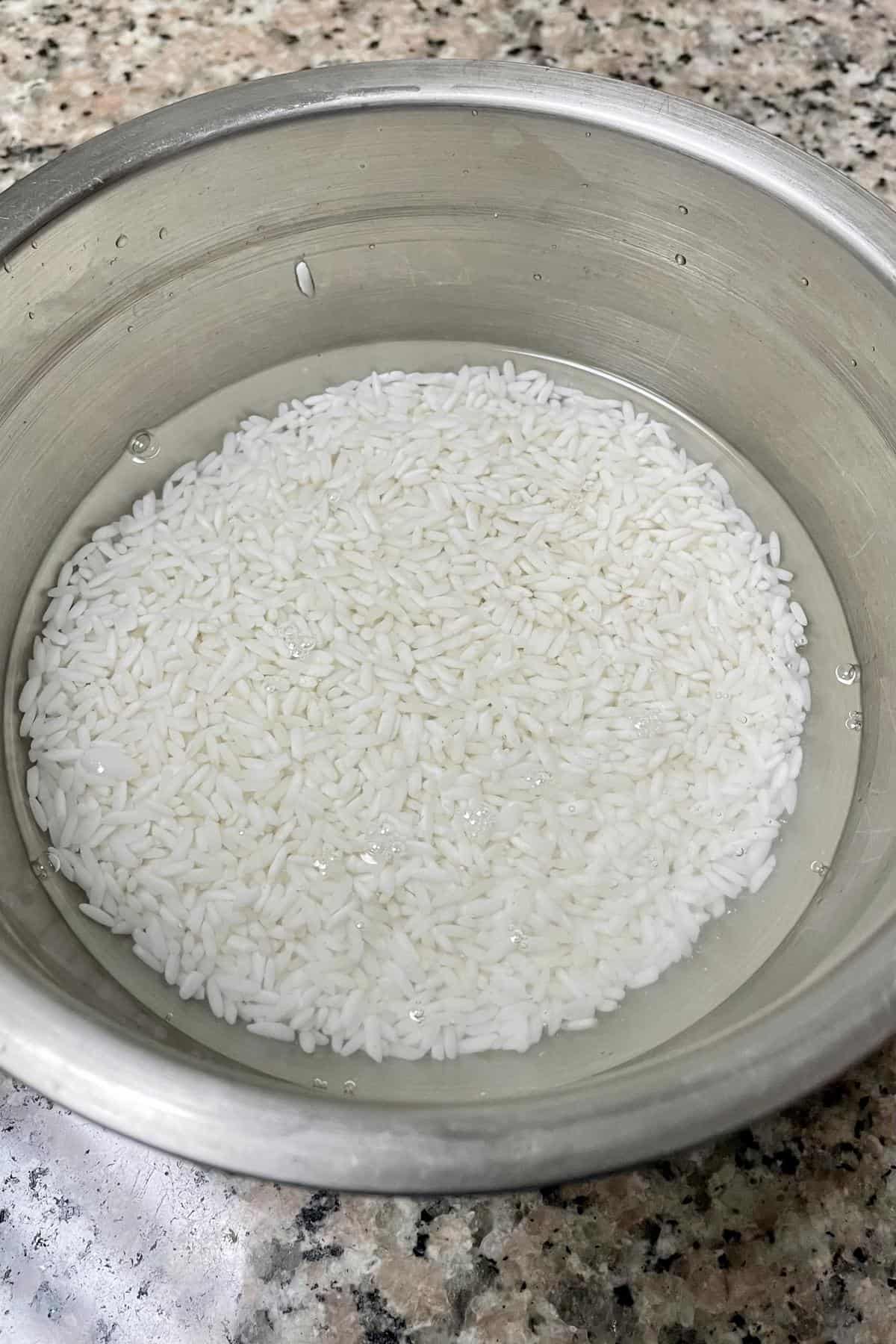
Soak the rice
Rinse the raw rice a few times till the water runs mostly clear. Soak in enough water for 4 to 6 hours.

Prep to Grind
Drain the soaked rice and stir in the cooked rice, grated coconut, instant yeast, salt, sugar and half of the water. Add to a mixie-grinder and grind in batches.
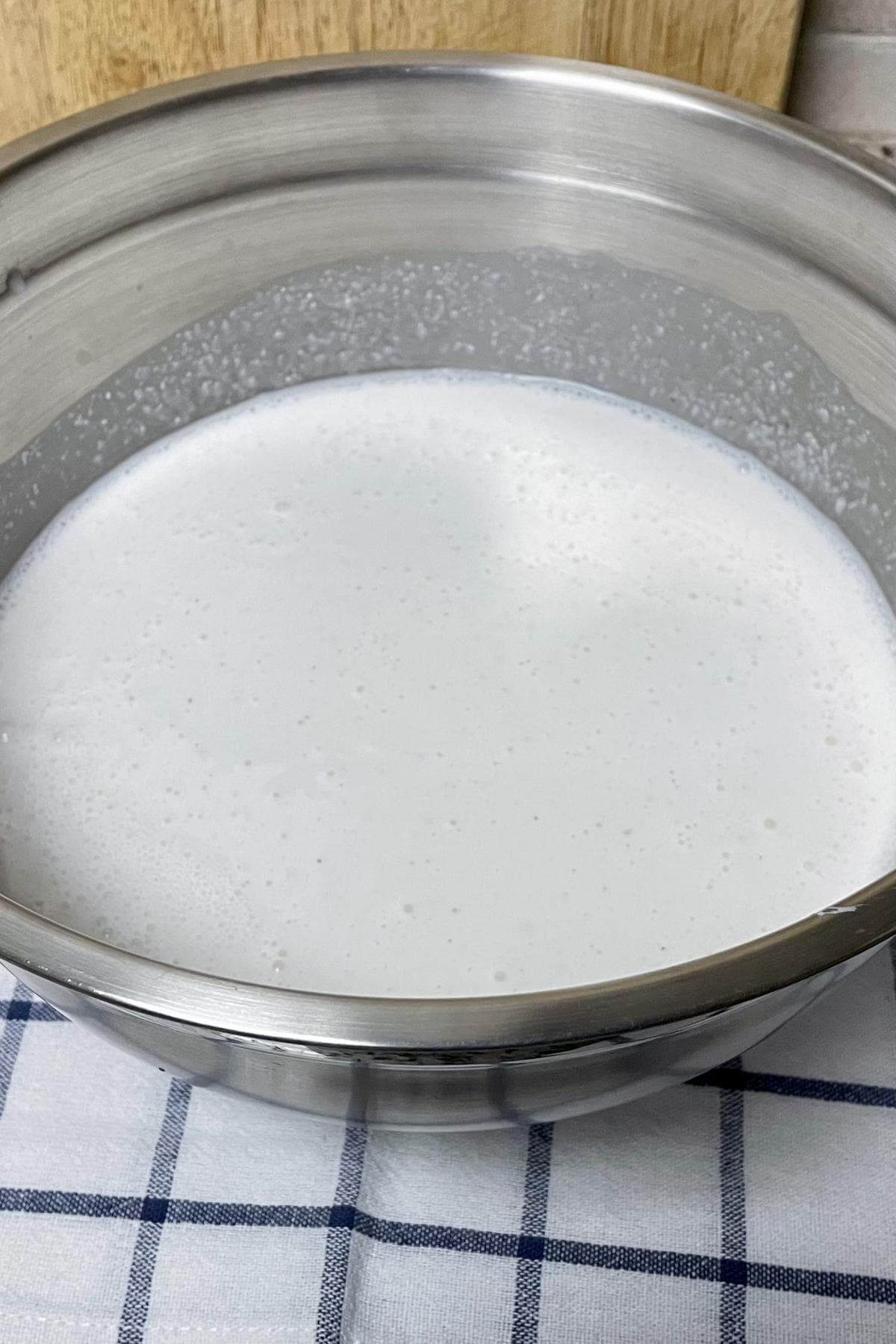
Grind
Grind (in batches if required) to a smooth batter by adding the remaining water as needed. The batter should be smooth and slightly thick but not too watery.
📝Take Note
You can adjust the batter consistency after fermentation if it is too thick. So, go slow on adding water while grinding.

Ferment the Batter
Pour the batter into a large bowl, as it'll rise! Cover loosely and leave in a warm place for at least 3 to 6 hours or overnight. It should double up and look bubbly on top. A good sign that fermentation worked!

Pour & Cook Method
Heat the pan on medium, stir the batter, and pour a ladleful into the centre. Cover and cook for about 2 minutes until you see tiny holes and the top looks set. No need to flip!
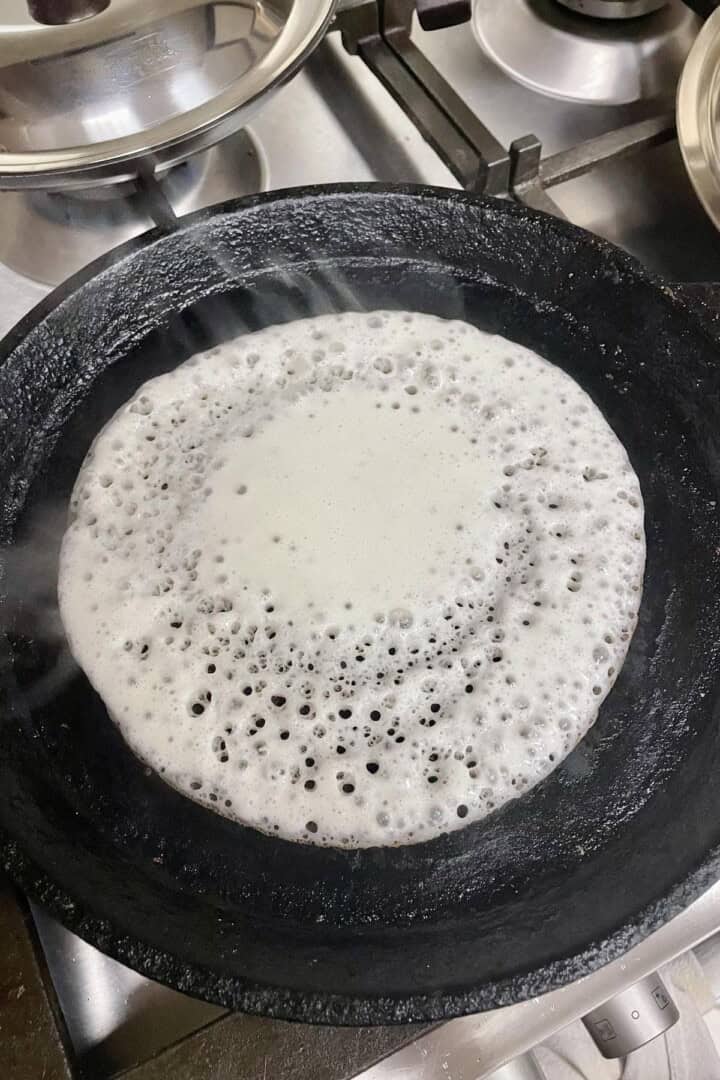
Pour & Spread Method
Another way of making in a flat pan - Pour a ladleful of batter in the centre, and then, using the back of the ladle, make quick spirals in a circular motion around the outer edge. This makes thinner palappam-shaped appams.
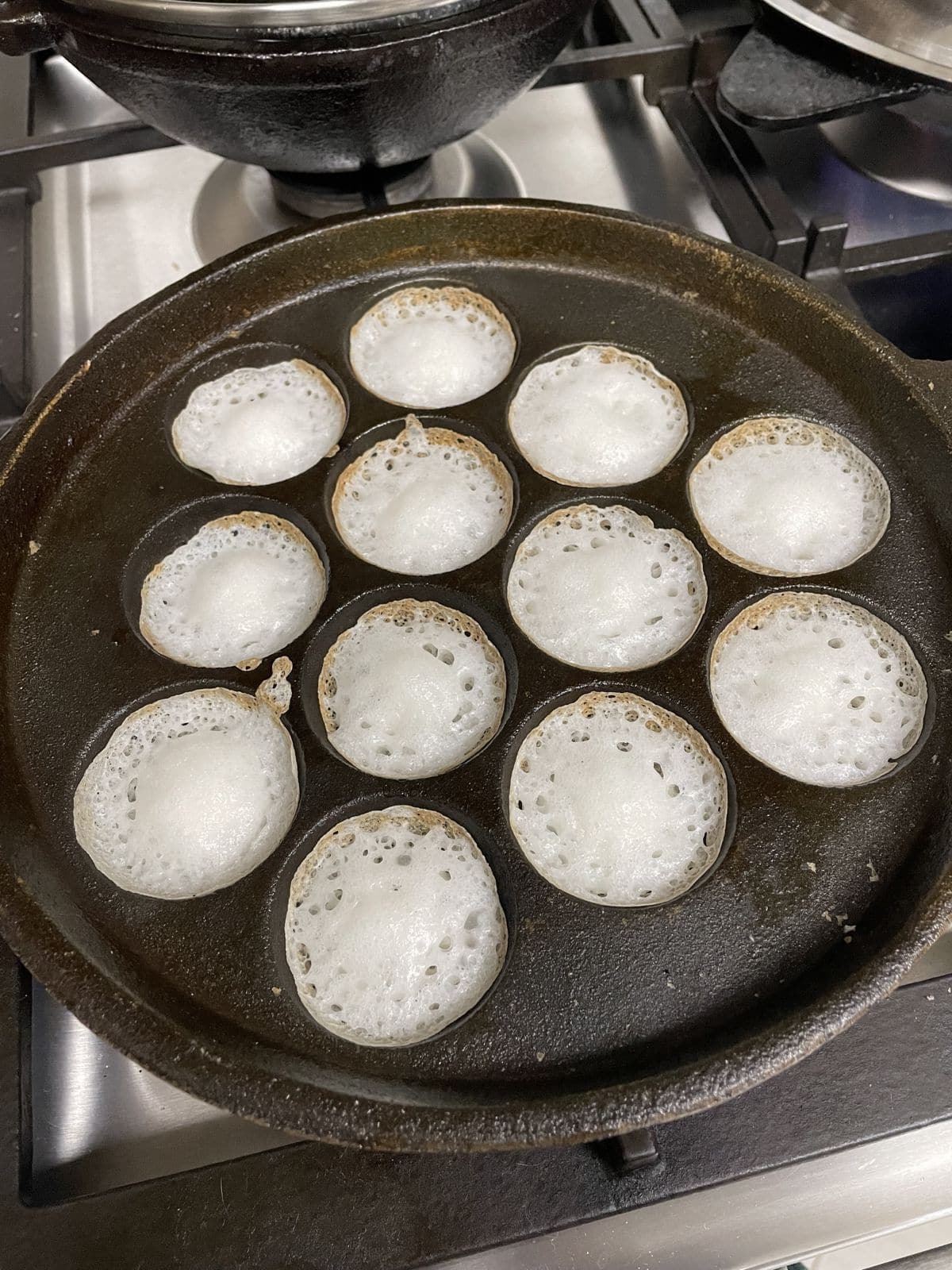
Mini Appe Pan Method
Heat and lightly grease the pan. Fill each cavity halfway with batter. Lift and swirl to coat the sides. Cover and cook 2-3 minutes. Scoop out using a spoon.

You can watch my Reels on these mini appams.
👩🏽🍳How to Store Cooked Vellayappams
Serve vellayappam hot for the best texture and taste. If you're cooking ahead, spread each one out on a tray as it comes off the pan - don't stack while hot or they'll stick together from the steam. Once they've cooled slightly, you can stack them gently. This helps them stay soft, separate, and ready to serve or reheat later.
💡Serving Suggestions
Here are my highly recommended pairing ideas to go with these fluffy vellayappams:
- You will be surprised how well these appams taste with my delicious tomato coconut chutney!
- Goes without saying - appam with stew! I have an easy chicken stew recipe with added vegetables. You can make it all chicken or all vegetables. Either way, the coconut milk stew is a winner.
- If you haven't tried appam with pepper chicken gravy, you haven't lived!
- Another classic combo is the quintessential Kerala mutta roast.
- And though not my personal favourite, I know friends and family who love to have vellayappam with simple Kadala curry!
- If you have leftover Malabar chicken curry or beef fry, they make a great side dish for this appam.
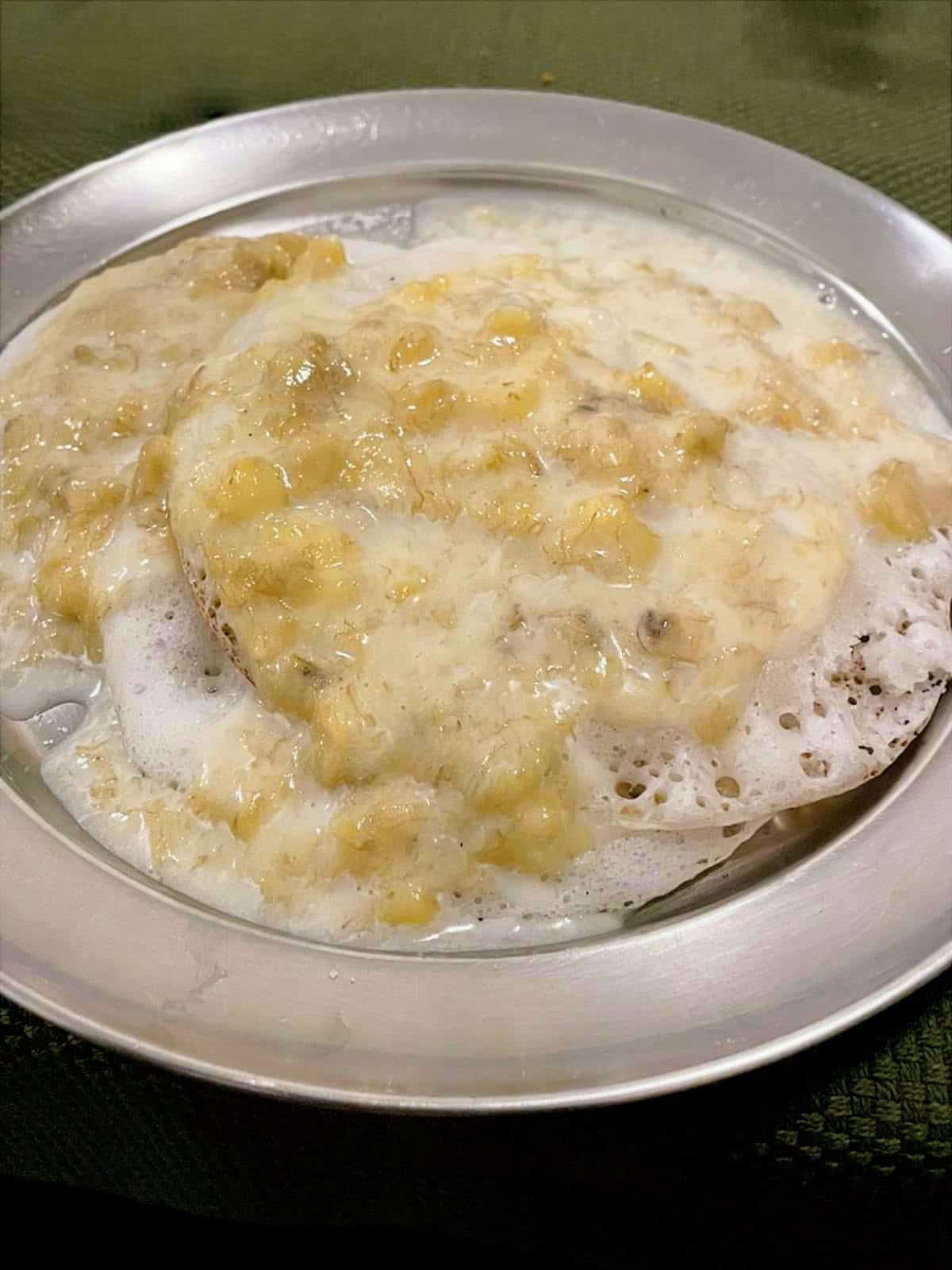
- Lastly, for sweet-toothed souls, create a concoction of mashed banana, milk, and cardamom - pour it over the appams and dig in! Thank me later!
☝️Recipe FAQS
Yes, you can! Substitute yeast with a spoonful of leftover idli or dosa batter. It may take longer to ferment (up to 12-16 hours), but it works well in warm conditions. My mom mostly makes it this way, as she always has idli batter or urad dal.
Lack of holes usually means the batter didn't ferment enough, or the pan wasn't hot enough when you poured it. Additionally, if the batter is too thick, it can remain dense instead of being light and bubbly.
I have not had success (yet) with rice flour, but the internet vouches for it. In the future, I would love to try Pavani's recipe for instant appam.
🍲Similar Recipes
Looking for other South Indian recipes? Try these:
- Unniyappam Recipe with Roasted Rice Flour
- Moru Curry without Coconut (Buttermilk Curry)
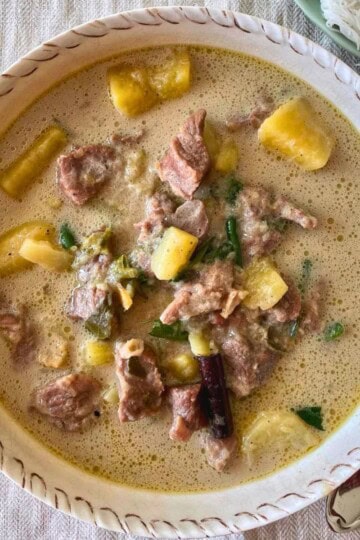
- Kerala Mutton Stew with Coconut Milk (Instant Pot)
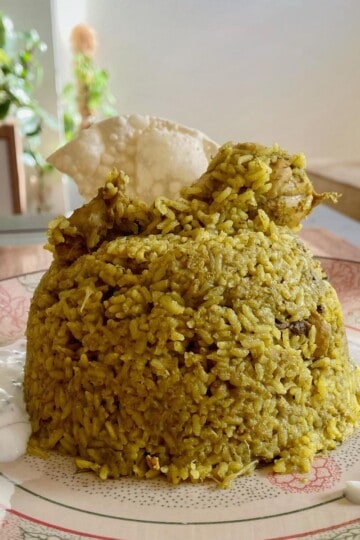
- One-Pot Chicken Donne Biryani Recipe

Enjoyed this Recipe?
Did you know that commenting and rating recipes is one of the best ways to support your favourite food bloggers? If you tried this recipe, please leave a review in the comments with your ⭐️⭐️⭐️⭐️⭐️ rating. Your feedback helps my small business keep offering free, high-quality recipe content. It is the best way to help me thrive in an increasingly competitive AI world.
📖 Recipe Card
Vellayappam Recipe with Yeast
Ingredients
- 2 cups raw rice, (pachari)
- 1 cup cooked rice, (basmati)
- 1 cup grated coconut
- 1 teaspoon instant yeast
- 2 teaspoon sugar
- salt to taste
- 2 cups water
Instructions
- Rinse and soak the raw rice in plenty of water for 4 to 6 hours or overnight.2 cups raw rice (pachari)
- To a mixie or grinder (powerful blender), drain and add the soaked raw rice, cooked rice, grated coconut, instant yeast, sugar and salt. Add half of the water to initially and grind until smooth and thick.1 cup cooked rice (basmati)1 cup grated coconut1 tsp instant yeast2 tsp sugarsalt to taste2 cups water2 cups raw rice (pachari)
- Pour the batter into a large deep bowl (it'll rise!). Make sure to add the remaining water and stir well. Cover loosely and leave in a warm place for 6-8 hours or overnight. It should double up and look bubbly on top. A good sign that fermentation worked!
- Heat a well-seasoned flat dosa pan or appe pan on medium heat.
- Stir the batter gently. Pour a ladleful of batter in the centre and let it spread on its own. Let it cook undisturbed until you start seeing holes forming. Cover with a lid and cook until the surface looks set. No need to flip! Note: These appams are meant to be soft and pillowy with holes all over and may not feature the crispy lace edges! Check the post for other methods of pouring.
- As you cook each appam, place them scattered on a tray. Do not stack them right away. This helps prevent them from sticking to each other while they're still hot and steamy.
- Serve these pillowy soft appams with Kerala style stew or egg curry or just dunk in sweetened coconut milk for a nostalgic bite!
Notes
- Batter too thick? Add a few tablespoons of water before making the appams.
- Batter consistency is key: not too runny, not too thick.
- If your batter didn't ferment, try a warmer spot or slightly more yeast.
- Leftover batter keeps well in the fridge for up to 2 days. Bring to room temperature before cooking.
Nutrition Info
Nutritional information is an estimate provided for informational purposes only. Values may vary based on ingredient brands, cooking methods, and portion sizes.


Famidha Ashraf says
Soft, fluffy, and perfect for soaking up ishtu or sweet milk, this vellayappam recipe is pure comfort! Try it and tell me how yours turned out ❤️